When Space Law Forgot About Capitalism
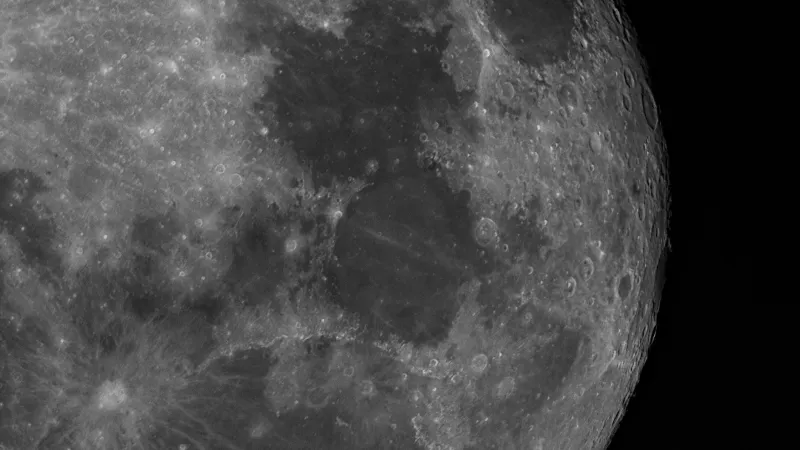
Imagine opening your mailbox to find an official-looking deed declaring you the proud owner of 40 acres on the Sea of Tranquility. Sounds like a novelty gift, right? Well, Dennis Hope of California would argue otherwise. In 1980, this enterprising American discovered that the 1967 Outer Space Treaty — the foundational document governing space exploration — had a glaring oversight that would make any lawyer's head spin.
 Photo: Sea of Tranquility, via www.timmchapman.com
The treaty clearly states that no nation can claim sovereignty over celestial bodies. But it says absolutely nothing about individuals.
The $20 Lunar Land Grab
Hope didn't just notice this loophole — he drove a metaphorical moon rover straight through it. He filed a declaration of ownership with the United Nations, the U.S. government, and the Soviet Union, claiming the entire moon (plus Mars, Venus, and most other planets) as his personal property. When nobody objected within the legal timeframe, Hope considered the deal sealed.
What happened next sounds like something from a comedy sketch, but it's absolutely real: Hope started the Lunar Embassy Commission and began selling one-acre plots of moon real estate for $19.95 each, plus shipping and handling for the deed.
The business exploded. Hope sold lunar property to everyone from celebrities to ordinary families looking for the ultimate novelty gift. Tom Cruise owns moon property. So do John Travolta, George Lucas, and Ronald Reagan. Hope claims to have completed over 600,000 transactions, generating millions in revenue from his extraterrestrial empire.
 Photo: Tom Cruise, via static0.gamerantimages.com
Why This Might Actually Be Legal
Here's where things get genuinely weird: several legal experts grudgingly admit Hope might have a point. The 1967 Outer Space Treaty was crafted during the Cold War when lawmakers were focused on preventing nations from planting flags on the moon, not stopping entrepreneurs from selling cosmic real estate.
The treaty's language specifically prohibits "national appropriation" of celestial bodies, but individual appropriation? That's apparently fair game. When Hope filed his claims and received no formal objections from the signatory nations, he arguably established a legal precedent under international property law.
Virgil Pop, a space law expert at the International Institute of Space Law, has noted that while Hope's claims are "highly questionable," the existing legal framework doesn't explicitly forbid them. It's a cosmic-sized legal gray area that governments have been reluctant to address directly.
The Bureaucratic Scramble
Hope's lunar land empire forced the United Nations into an awkward position. How do you handle someone who's technically following the letter of space law, even if they're completely ignoring its spirit? The answer, apparently, is to pretend it's not happening while quietly working on new legislation.
Several countries have since passed national laws clarifying that their citizens can't own extraterrestrial property, but these laws don't retroactively invalidate Hope's original claims. Meanwhile, the UN has been working on updated space treaties for decades, but reaching international consensus on cosmic property rights has proven surprisingly difficult.
The eBay Incident That Changed Everything
In 2005, Hope's lunar real estate business hit a snag that perfectly illustrates how bizarre this situation had become. When some of his customers tried to resell their moon property on eBay, the auction site initially allowed the listings. After all, the sellers had official-looking deeds for their extraterrestrial parcels.
eBay eventually banned lunar real estate sales, but not because they were necessarily illegal — the company cited their policy against selling "items that cannot be verified." Think about that: eBay's problem wasn't with the legality of moon ownership, but with their inability to confirm the property actually existed in sellable condition.
A Legacy Written in Moon Dust
Today, Hope continues operating his Lunar Embassy Commission, though with considerably less fanfare than during the height of the moon property craze. His business has survived multiple legal challenges, government investigations, and decades of skepticism from the scientific community.
The truly remarkable part? Those lunar deeds might actually mean something someday. As private space exploration advances and moon bases transition from science fiction to business plans, the question of extraterrestrial property rights is becoming increasingly relevant. Companies like SpaceX and Blue Origin are already planning commercial lunar operations, and they'll need to navigate the same legal framework that Hope exploited decades ago.
The Final Frontier of Real Estate
Hope's cosmic real estate empire reveals something fascinating about human nature and legal systems: given enough creativity and persistence, almost any loophole can become a business opportunity. Whether his lunar land sales will ultimately be recognized by future space-faring governments remains an open question.
But for now, hundreds of thousands of people around the world possess official-looking documents declaring them lunar property owners. And technically speaking, nobody has definitively proven they're wrong.
In a universe where international law still hasn't figured out who can own what beyond Earth's atmosphere, Dennis Hope's moon empire stands as perhaps the most audacious example of cosmic capitalism ever attempted. Whether he's a visionary entrepreneur or an elaborate con artist might depend entirely on whether humanity ever actually needs those property deeds.
Until then, the moon remains the solar system's most expensive vacant lot — and Dennis Hope is still its self-appointed landlord.