When Crime Pays Everyone But the Criminals
Picture this: three desperate men walk into a bank planning to steal enough money to escape the Great Depression. Instead, they accidentally save an entire town's economy without taking a single dollar. It sounds like the plot of a screwball comedy, but in Millfield, Nebraska, it was Tuesday, March 15th, 1932.
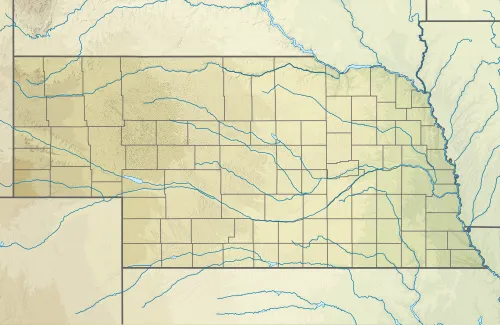 Photo: Millfield, Nebraska, via upload.wikimedia.org
The Farmers' Trust Bank of Millfield was barely hanging on by 1932. Half the storefronts on Main Street stood empty, the grain elevator had shuttered, and the population had dwindled from 1,200 to fewer than 800 souls. Like thousands of small Midwestern communities, Millfield was slowly bleeding to death.
That's when Frank Morrison, his brother Eddie, and their cousin Pete Kowalski decided to rob the place.
The World's Most Incompetent Bank Job
The Morrison gang's criminal masterplan had exactly one flaw: they were spectacularly bad at crime. Frank forgot to bring a getaway car. Eddie's gun jammed when he tried to intimidate the teller. Pete panicked and accidentally locked himself in the bank vault—from the outside.
By the time the dust settled, the would-be robbers had managed to:
- Trigger every alarm in the building
- Knock over a filing cabinet containing 20 years of loan documents
- Shatter the front window with a poorly thrown money bag
- Get themselves arrested without stealing so much as a penny
Bank president Harold Wickham later said it was "the most expensive nothing that ever happened to us."
The Federal Cavalry Arrives
Here's where the story gets weird. Because the Farmers' Trust was a federally chartered bank, the FBI dispatched a full investigation team from Omaha. What should have been a one-day questioning turned into a six-month federal occupation of Millfield.
The reason? Those scattered loan documents.
When Eddie Morrison knocked over that filing cabinet, he'd inadvertently exposed twenty years of questionable banking practices. Not criminal practices—just the kind of creative accounting that small-town banks used to survive the agricultural boom and bust cycles. But untangling the mess required forensic accountants, federal auditors, and banking specialists.
Suddenly, Millfield was crawling with federal employees.
The Accidental Economic Stimulus
Twenty-three federal investigators, accountants, and support staff descended on a town that hadn't seen that many visitors since the county fair of 1929. They needed places to stay, meals to eat, and services that Millfield's struggling businesses were desperate to provide.
Mary Kowalski (no relation to Pete) reopened her boarding house to accommodate the federal workers. The Millfield Diner went from serving maybe thirty customers a day to being packed for every meal. Henderson's General Store started carrying items they hadn't stocked in years—typewriter ribbons, carbon paper, and decent coffee.
Even the local barber, who'd been considering moving to Lincoln, suddenly found himself cutting hair for men earning federal salaries.
Six Months of Bureaucratic Prosperity
The federal investigation dragged on through the summer and into the fall. Every week the investigators thought they were nearly finished, and every week they discovered another box of records that needed reviewing. The Morrison brothers' incompetent crime had created the most thorough bank audit in Nebraska history.
Meanwhile, Millfield was experiencing its own mini-boom. Local businesses hired back workers they'd laid off. Three families who'd been planning to abandon their farms decided to stay another year. The town council even managed to fix the main street's potholes for the first time since 1928.
By October 1932, the per capita income in Millfield had risen 40% compared to the previous year—entirely because three local men had tried and failed to rob their own bank.
The Investigation Ends, Reality Returns
In November 1932, the federal investigators finally declared the Farmers' Trust Bank's books sufficiently untangled. The Morrison gang received sentences ranging from six months to two years for attempted bank robbery. The bank itself received a clean bill of health and a stern warning about record-keeping.
More importantly for Millfield, the federal workers packed up and went home.
Within six months, the town's brief prosperity had evaporated. The boarding house closed again. The diner went back to serving coffee and hope to a handful of regulars. By 1934, Millfield's population had dropped to 600, and it never recovered its pre-Depression size.
The Legacy of America's Most Productive Crime
Today, Millfield is a ghost town. The Farmers' Trust Bank building still stands, though it's been a feed store, an antique shop, and currently sits empty. But for six months in 1932, three bumbling criminals accidentally demonstrated something that economists wouldn't formally recognize for another decade: the power of federal spending to stimulate local economies.
The Morrison gang never intended to save Millfield—they'd planned to rob it and leave. Instead, their spectacular failure brought the town its last taste of prosperity. It's probably the only bank robbery in American history where the criminals accidentally helped more people than they hurt, without ever stealing a dime.
Frank Morrison, released from prison in 1934, reportedly said he was proud that his "worst crime" had given his neighbors "the best six months they'd had in years." Sometimes the most unlikely heroes are the ones who fail so completely they succeed by accident.