From County Clerk to Cosmic Landlord: The Nevada Man Who Legally Owns the Moon
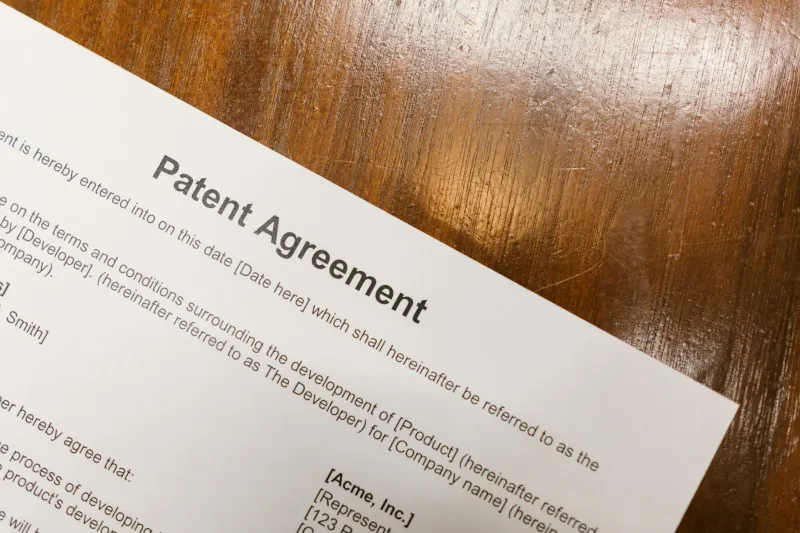
The Day Someone Actually Read the Fine Print
Most people glance at legal documents and move on with their lives. Dennis Hope, a Nevada entrepreneur, decided to read the 1967 Outer Space Treaty word by word. What he discovered in 1980 would turn him into the most unlikely real estate tycoon in human history — and possibly the legal owner of Earth's only natural satellite.
The treaty, signed by every major spacefaring nation, clearly states that "no nation by appropriation shall have sovereignty or control over any of the celestial bodies." Nations can't own space. But Hope noticed something peculiar: the document never mentioned individuals. It was a loophole big enough to drive a lunar rover through.
Filing the Universe's Strangest Property Deed
On November 22, 1980, Hope walked into the Nye County courthouse in Nevada and filed a declaration of ownership for the Moon. Not a crater here or there — the entire Moon. He sent formal notices to the United States government, the Soviet Union, and the United Nations, informing them of his claim and giving them a reasonable opportunity to object.
Nobody responded.
In Hope's interpretation, their silence constituted legal acceptance under the principle of "acquiescence" — essentially, if you don't contest a claim when given proper notice, you've agreed to it. Whether this logic holds up in intergalactic court remains to be seen, but it was enough to launch the most audacious business venture in history.
The Lunar Real Estate Empire Takes Off
What started as a quirky legal experiment quickly became a multimillion-dollar enterprise. Hope founded the Lunar Embassy, marketing himself as the Moon's sole authorized real estate agent. For just $19.99, customers could purchase their very own acre of lunar property, complete with an official-looking deed, a site map, and a copy of the Lunar Constitution that Hope thoughtfully drafted.
The business model was brilliant in its simplicity. The Moon has roughly 9.4 billion acres of surface area — enough to sell plots to every person on Earth and still have real estate left over. With zero overhead costs (no property taxes, no maintenance, no pesky tenants), it was pure profit.
Celebrity Moon Barons and Presidential Property Owners
What's perhaps most remarkable isn't that Hope claimed the Moon — it's how many people took him seriously. His customer list reads like a Hollywood directory: Tom Cruise, Nicole Kidman, John Travolta, and Barbara Streisand all own lunar real estate. Former Presidents Ronald Reagan, Jimmy Carter, and George W. Bush received Moon deeds as gifts.
Entire corporations have gotten in on the action. Hotels have purchased land for future lunar resorts. Mining companies have bought mineral rights. One couple even held their wedding ceremony on their purchased lunar plot — virtually, of course.
By some estimates, Hope has sold over 600 million acres to more than 6 million customers worldwide, generating roughly $12 million in revenue. Not bad for property he's never actually visited.
The Legal Gray Zone That Defies Gravity
The truly bizarre aspect of Hope's lunar empire isn't the audacity — it's that no government has seriously challenged him. The legal community remains split on whether his claim has any validity whatsoever.
Supporters point out that the Outer Space Treaty genuinely doesn't prohibit individual ownership. They note that Hope followed proper legal procedures, filed appropriate paperwork, and gave governments ample opportunity to contest his claim. His deeds are legally recorded documents in Nevada, complete with official seals and registration numbers.
Critics argue that the entire premise is ridiculous. They contend that the treaty's spirit clearly prohibits any earthly ownership of celestial bodies, whether by nations or individuals. They point out that Hope has no way to actually occupy, improve, or defend his claimed property — traditional requirements for establishing legal ownership.
The U.S. government's position has been notably passive. Rather than explicitly challenging Hope's claim, officials have simply stated that they don't recognize private property rights on celestial bodies. It's a careful non-endorsement that avoids creating legal precedent either way.
When Science Fiction Meets Property Law
As private space travel becomes increasingly realistic, Hope's lunar land grab has taken on new significance. Companies like SpaceX and Blue Origin are making Moon missions commercially viable. NASA plans to establish a permanent lunar base by 2030. Suddenly, Hope's seemingly absurd property claims don't feel quite so fictional.
Space lawyers — yes, that's a real profession — are frantically trying to establish legal frameworks for extraterrestrial property rights before the first lunar McDonald's opens for business. The questions Hope raised in 1980 are becoming urgent policy issues.
If private citizens can establish settlements on the Moon, who owns the land beneath them? If companies extract valuable minerals from lunar soil, who gets the profits? Hope's paperwork might be the only existing legal claim to reference when these scenarios become reality.
The Ultimate Property Investment
Whether Hope is a visionary entrepreneur or an elaborate con artist depends entirely on your interpretation of international law and the future of space commerce. What's undeniable is that he identified a genuine legal loophole and exploited it with remarkable persistence.
His customers seem largely unbothered by the questionable legal status of their purchases. Many treat their Moon deeds as novelty gifts or conversation pieces. Others genuinely believe they're making shrewd investments in humanity's extraterrestrial future.
Hope, now in his 70s, continues operating the Lunar Embassy from his Nevada headquarters. He's expanded his cosmic real estate portfolio to include Mars, Venus, and several moons of Jupiter. He's even established a lunar government-in-exile, complete with a constitution, currency, and appointed officials.
Whether his empire will survive first contact with actual lunar colonization remains the universe's most expensive unanswered question. Until then, Dennis Hope remains the solar system's most successful property developer — and the only person who can legally sell you a piece of the Moon.
Probably.