The Same Symphony Stopped at the Same Exact Moment — Six Months Apart, Different Stage, Different Conductor
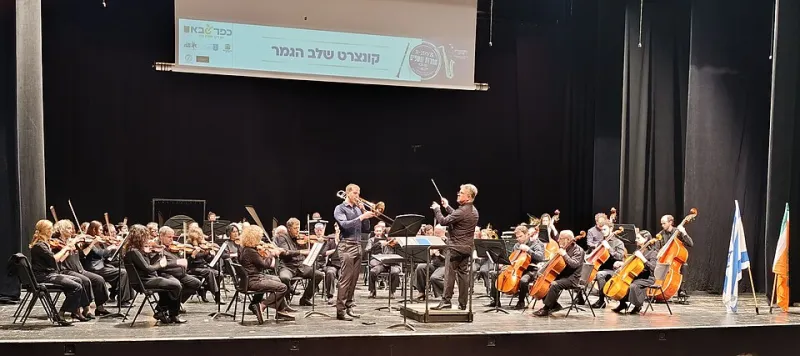
Photo: דוד שי, CC BY-SA 4.0, via Wikimedia Commons
If this had happened once, it would have been a mildly interesting story about bad luck and electrical infrastructure. It happened twice — in the same piece of music, at the same moment in the score, under completely different circumstances — and now it's the kind of thing musicians in that orchestra still bring up when conversations turn to things that don't have clean explanations.
The piece was Dvořák's Symphony No. 9. The orchestra was a mid-sized regional ensemble based in the American Midwest. And the note where everything stopped — both times — was in the third movement, at a particular swell in the strings that players who were there describe as one of the most emotionally charged moments in the entire work.
Make of that what you will.
The First Night
The original performance was scheduled for a Friday evening in late October. The hall was full, the program had been distributed, and the orchestra had been rehearsing the Dvořák for the better part of two months. The conductor that season was a guest — a well-regarded musician from the East Coast filling in while the ensemble's permanent director was on medical leave.
The first two movements went cleanly. The audience was engaged. The third movement began.
And then, at the precise moment when the strings reach a particular ascending phrase — one that players describe as "the exhale before the climb" — the lights went out.
Not a flicker. A full, immediate blackout. The kind that comes with a mechanical thud from somewhere in the building and leaves you standing in genuine darkness for a second before the emergency lighting kicks on.
The performance stopped. It had to. You cannot play a concert in the dark, at least not one that's been rehearsed under lights with a full score. After twenty minutes of waiting to see if power would be restored, the audience was dismissed. The concert was rescheduled.
The cause was eventually traced to an electrical fault in a transformer serving that section of the building — unrelated to the orchestra, unrelated to anything the venue had done wrong. Just infrastructure failing on a cold October night.
Six Months Later
The rescheduled performance took place the following April. By that point, the guest conductor had returned to his home city. The ensemble's permanent director was back on the podium. Several musicians had rotated out of the lineup over the winter, replaced by new players who had not been present for the October blackout. The venue had upgraded its electrical system as part of a broader renovation.
The program was the same. The Dvořák was the same. Everything else was different.
The first two movements went cleanly. The audience — many of whom had been at the October performance and were, by all accounts, slightly tense about it — began to relax. The third movement began.
At the ascending string phrase in the third movement — the same phrase, the same measure, the same moment in the music — a lighting board malfunction in the technical booth caused half the stage lights to cut out.
Not a full blackout this time. But enough of a disruption that the conductor stopped the performance, the house lights came up, and the ensemble had to pause for nearly fifteen minutes while the technical crew assessed the situation.
The musicians looked at each other.
Some of them started laughing. Some of them didn't.
What the Numbers Say
The third movement of Dvořák's Ninth runs approximately twelve minutes in standard performance. The ascending string phrase that both incidents interrupted occurs roughly six minutes in — the midpoint of the movement, and about twenty-two minutes into the full symphony.
A statistician who was presented with the basic facts of this story — without being told what piece it was or who was performing — calculated the odds of two independent technical failures occurring within the same sixty-second window of a roughly sixty-five-minute concert at somewhere in the range of one in four thousand, assuming the failures were truly unrelated.
That's not impossible. It's not even that improbable by the standards of genuinely weird coincidences. But it felt improbable to the people who were standing on that stage when it happened the second time.
"You don't think about statistics in that moment," one violinist said afterward. "You think about the fact that you've been here before."
The Explanations That Were Offered
The orchestra's technical director spent some time after the April performance trying to find a mundane through-line between the two incidents. Was there something about that particular passage — the dynamics, the vibration from the string section, the specific frequency of sound produced at that moment — that could interact with aging electrical components in a predictable way?
It's not as far-fetched as it sounds. Acoustic resonance can, under specific conditions, affect certain types of equipment. Concert halls are complex acoustic environments, and there is documented research on the ways sustained sound at particular frequencies can interact with physical structures.
But the two failures involved completely different systems — a transformer fault in October, a lighting board malfunction in April — and the renovated electrical infrastructure meant there wasn't even the same hardware involved. The technical director eventually concluded that the connection, if there was one, wasn't findable through conventional analysis.
The Third Performance
The orchestra did eventually perform the Dvořák to completion — a third attempt, the following season, which went without incident. The piece finished. The audience applauded. Everyone went home.
Several musicians admitted they had been holding their breath during the third movement.
The permanent conductor, asked about the whole sequence of events in a program note for that final performance, wrote something that has stuck with people who read it: "Music doesn't cause things to happen. But sometimes it seems to know when they will."
That's not a scientific explanation. It's not meant to be. It's just the observation of someone who stood on a stage twice, watched something inexplicable occur at the same moment in the same piece of music, and decided that honesty was more useful than a tidy answer.
Some stories don't resolve. They just stop — and start again, and stop at the same place, and eventually finish without ever explaining themselves.