The Accident That Created a Nation
Sometimes the most absurd countries are born from the most mundane shipping errors. In 1967, British Army Major Roy Bates was looking for a radio station location that would keep him outside UK broadcasting regulations. What he found was Roughs Tower — a rusty, abandoned World War II naval platform sitting seven miles off the English coast in the North Sea.
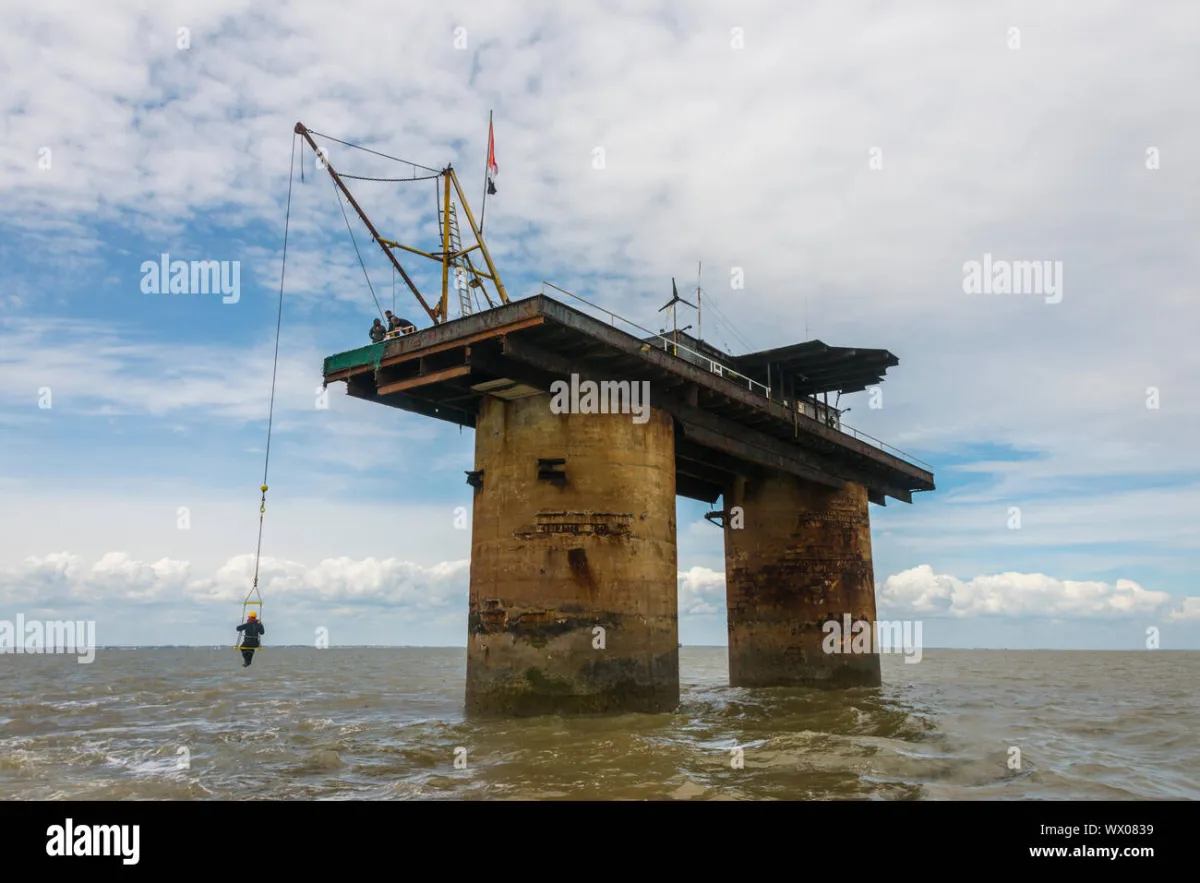 Photo: Roughs Tower, via c8.alamy.com
Bates figured he'd set up his pirate radio operation and thumb his nose at British broadcasting laws from international waters. What he didn't expect was to accidentally discover that he'd found the perfect location to start his own country.
The Legal Loophole That Launched a Thousand Laughs
When the British government tried to evict Bates from the platform, something remarkable happened: their own lawyers told them they couldn't do it. Roughs Tower sat exactly seven miles from shore — just beyond Britain's territorial waters, which extended only three miles at the time.
In one of history's most ironic legal coincidences, Britain's own maritime laws meant the platform existed in a genuine no-man's land where British authority simply didn't apply. Bates had accidentally stumbled upon the perfect sovereign territory, and there wasn't a thing the Crown could do about it.
So on September 2, 1967, Bates did what any reasonable person would do when handed their own country on a silver platter: he declared independence and proclaimed himself Prince Roy of the Principality of Sealand.
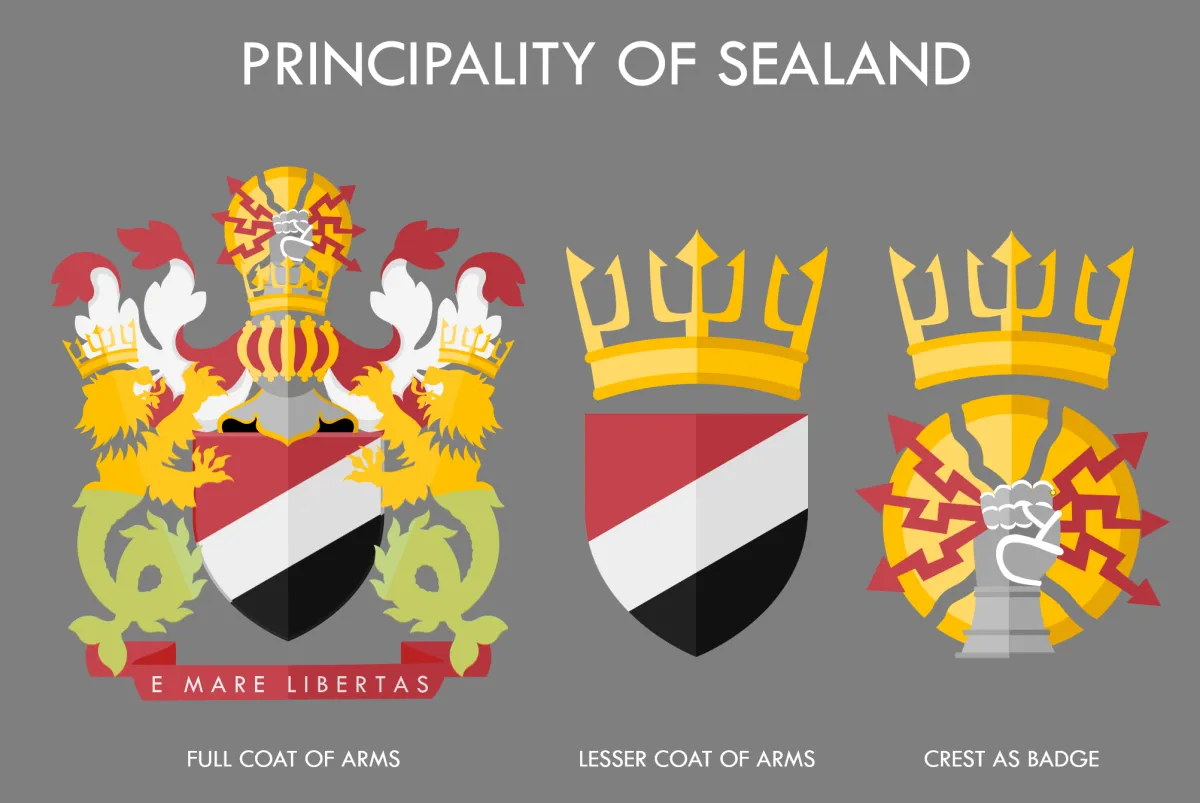 Photo: Principality of Sealand, via i.redd.it
Building a Nation from Rust and Determination
What started as a radio broadcasting stunt quickly evolved into something far more elaborate. Bates and his family moved to Sealand permanently, transforming the cramped platform into their royal residence. They designed a flag (half red, half black, with a diagonal white stripe), composed a national anthem, and even minted their own currency — Sealand dollars that featured Prince Roy's portrait.
The platform itself was hardly palatial. Originally built in 1943 to house anti-aircraft guns, Roughs Tower consisted of two concrete pillars supporting a steel platform about the size of two tennis courts. But Bates approached nation-building with military precision, establishing immigration controls, issuing passports, and creating a constitutional monarchy complete with hereditary titles.
By any measure, it was the world's smallest country — and possibly its most determined one.
The Coup That Proved Sealand Was Serious
In 1978, Sealand faced its first and only coup attempt, proving that even micro-nations aren't immune to political intrigue. Alexander Achenbach, a German businessman who'd been appointed Sealand's "Prime Minister," arrived at the platform with several armed mercenaries while Prince Roy was away in England.
The coup initially succeeded. Achenbach's forces captured Prince Michael (Roy's son) and held Sealand for several days. But they hadn't counted on the Bates family's military background. Prince Roy returned with his own armed supporters, retook the platform in a dramatic helicopter assault, and captured the coup plotters.
Here's where things get genuinely surreal: Bates held Achenbach prisoner and charged him with treason against Sealand. When the German government requested Achenbach's release, Bates agreed — but only after Germany sent a diplomat to negotiate directly with Sealand authorities.
By sending an official representative to secure Achenbach's freedom, Germany inadvertently became the first nation to grant Sealand diplomatic recognition. It was an accidental acknowledgment of sovereignty that international law experts are still debating today.
The Passport Scandal That Rocked Europe
Sealand's greatest international controversy erupted in the 1990s when Spanish police discovered that Sealand passports were being used by international criminal networks. Apparently, the novelty of owning documents from a "sovereign nation" had attracted some very unsavory customers.
The scandal reached absurd heights when investigators discovered that over 150,000 Sealand passports had been issued — roughly 300 times Sealand's actual population. Prince Roy claimed the documents were being produced without his authorization by criminals who'd somehow obtained official Sealand seals and documentation.
The Spanish government demanded explanations. Interpol launched investigations. European Union officials held emergency meetings about passport security. All because of documents issued by a family living on a rusty platform in the North Sea.
Digital Age Sovereignty
As the internet age dawned, Sealand found new relevance as a data haven. The platform's unique legal status made it attractive to companies seeking to host servers outside traditional national jurisdictions. In 2000, a company called HavenCo established operations on Sealand, promising "bulletproof hosting" for websites that might face censorship elsewhere.
The venture ultimately failed, but it highlighted something important: Sealand's sovereignty claims weren't just amusing historical curiosities. In an increasingly connected world, the question of who has legal authority over what territory — even tiny territories — carries real implications for everything from internet freedom to international commerce.
The Royal Family Endures
Prince Roy Bates died in 2012, but Sealand continues under the rule of his son, Prince Michael. The principality has modernized somewhat — it now has a website, sells novelty titles and souvenirs online, and maintains active social media accounts. You can become a Lord or Lady of Sealand for about $45, though the title comes with no actual legal authority.
The platform itself has been renovated multiple times, though it remains a challenging place to live. Fresh water must be shipped in, electricity comes from diesel generators, and the nearest grocery store is a helicopter ride away. But the Bates family has maintained continuous occupation for over five decades, meeting one of the key requirements for sovereign recognition under international law.
Why Sealand Still Matters
Sealand's continued existence highlights the strange gaps and inconsistencies in international law. While no major nation formally recognizes Sealand's sovereignty, none has definitively disproven it either. The principality exists in a legal gray area that reveals how arbitrary national boundaries can be.
More importantly, Sealand demonstrates how determination and legal technicalities can sometimes trump military might and diplomatic pressure. A British Army major with a radio broadcasting hobby accidentally created a country that has outlasted numerous British prime ministers and survived longer than many legitimate nations.
In an age when questions of sovereignty, territorial waters, and international jurisdiction are becoming increasingly complex, Sealand stands as a reminder that sometimes the most absurd solutions are also the most enduring ones.
After all, if a rusty oil platform can become a country through sheer persistence and legal loopholes, what does that say about the nature of nations themselves?