Nature Turned These Rusted Shipwrecks Into Floating Forests
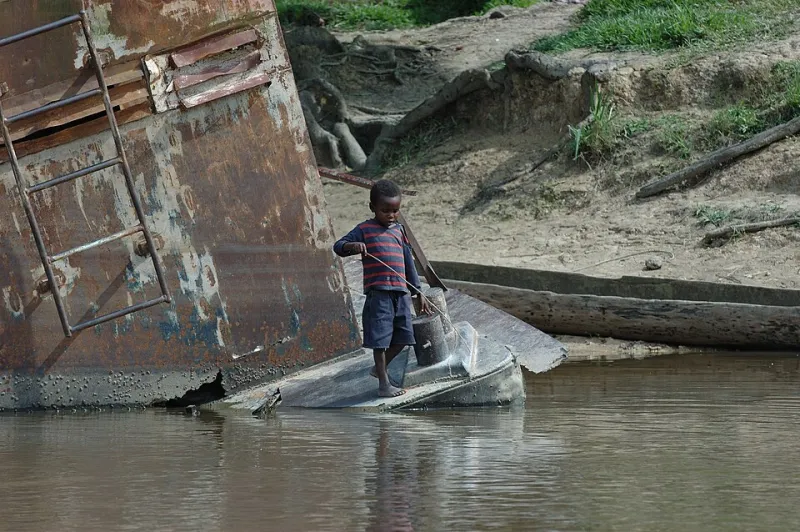
Photo: Julien Harneis from Conakry, Guinea, CC BY-SA 2.0, via Wikimedia Commons
A ship sinks, and most people figure that's the end of the story. The ocean has other plans.
Across the South Pacific, there are wrecks that have spent the better part of a century doing something no engineer designed them to do: becoming land. Rusting hulls half-sunk in warm, shallow water have collected sediment, caught drifting seeds, and grown into genuine ecosystems — mangroves rooted in steel, trees swaying where sailors once stood, seabirds nesting in the superstructure. They are, quite possibly, the strangest gardens on Earth, and every one of them was planted by accident.
The Wreck That Became an Island
The classic example involves World War II-era vessels abandoned in the shallow waters of the Pacific theater, where hundreds of ships were damaged, scuttled, or simply left behind when the war moved on. In the warm tropics, the colonization clock starts fast.
First comes the biofilm: bacteria and algae coating every surface within weeks. Then come the barnacles, oysters, and tube worms, building a living crust on the hull. Sediment — sand, silt, decaying organic matter — collects in the sheltered nooks of the deck and hull breaches. Within a few years, the wreck is less a ship and more a very weird reef.
Then the wind does its part. Mangrove propagules — those pencil-shaped seedlings that float — drift into the wreck's debris and wedge into the sediment. Mangroves are the ultimate pioneers; they'll root in almost anything salty and unstable. Once a few take hold, everything accelerates. Their roots trap more sediment, raising the surface. Their leaf litter builds soil. Birds arrive, bringing seeds in their feathers and droppings, along with fertilizer.
Decades later, you can paddle up to what looks like a small, overgrown islet — and then notice the rusted hull underneath, the anchor chain snaking into the sand, the portholes staring out from beneath the vegetation.
Why Scientists Love These Places
Marine biologists treat wreck-forests as accidental laboratories, and the research questions are genuinely interesting.
How fast can an ecosystem assemble itself? Traditional ecological theory says colonization takes long time horizons. These wrecks compress the experiment: researchers can compare hulls abandoned 10, 40, or 80 years ago and watch succession unfold like chapters in a book.
What colonizes what, and in what order? The species sequences on wrecks don't always match what textbooks predict, which tells scientists that chance — which seeds arrive first, which storms dump sediment where — matters as much as any rulebook.
Can they teach restoration? Mangrove forests are among the most carbon-rich ecosystems on the planet, and coastal restoration projects routinely struggle to reestablish them. Wrecks show that in the right conditions, mangroves will colonize artificial structure aggressively. Some engineers have taken the hint, designing 'reef balls' and sunken structures specifically to jump-start the same process on eroding coastlines.
The Irony
There's a dark footnote to all of this. Many of these wrecks are leaking — slowly releasing fuel oil and corrosion products into waters that are, ironically, now teeming with life. Conservationists face an odd dilemma: cleaning a wreck protects the surrounding reef but destroys the forest that grew on it.
A ship built for war, abandoned in defeat, now hosting more life per square foot than the waters around it. If you'd written that ending, an editor would have called it too sentimental to be believable.
The ocean, it seems, doesn't do drafts. It just keeps the ending nobody expected.