The Immortal Rag That Haunted Musicians
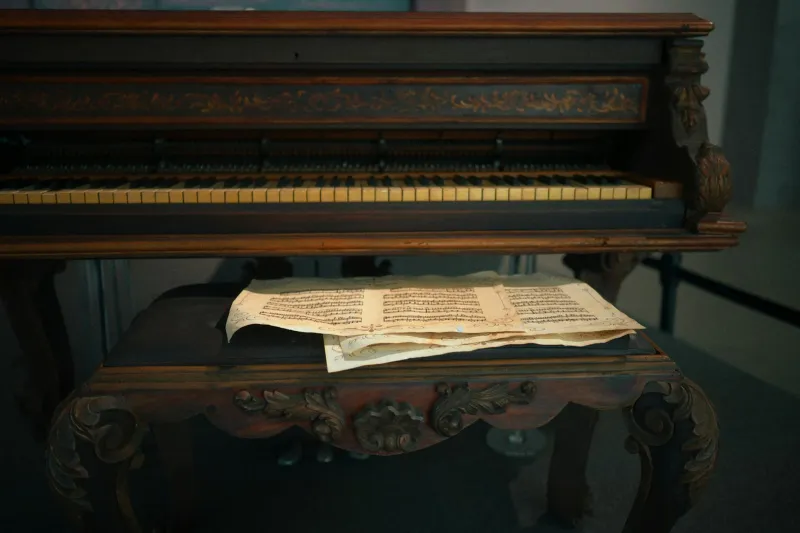
In 1987, jazz pianist Marcus Webb was putting together an album of vintage ragtime pieces when he stumbled across "Midnight Express Rag," a sprightly 1923 composition that seemed perfect for his project. The sheet music was readily available, the song was catchy, and Webb was confident he'd found a hidden gem from ragtime's golden age.
 Photo: Marcus Webb, via static.www.nfl.com
Then his record label's legal department delivered some impossible news: the song was still under copyright protection. The composer had been dead for forty years. The publishing company had dissolved in 1954. The entire ragtime industry had been extinct since the 1920s. But somehow, "Midnight Express Rag" was still legally off-limits.
Webb had discovered America's most persistent musical ghost.
When Copyright Law Becomes Frankenstein's Monster
The story of "Midnight Express Rag" begins with Clarence "Ragtime" Murphy, a prolific composer who cranked out dance tunes for Midwest Music Publishers in Kansas City during the early 1920s. Murphy was a reliable journeyman—not a household name like Scott Joplin, but competent enough to keep the sheet music flowing to piano players across America.
 Photo: Kansas City, via www.shutterstock.com
In 1923, Murphy composed "Midnight Express Rag" under a standard work-for-hire contract that assigned all rights to Midwest Music Publishers. Under the copyright law of the time, the song was protected for 28 years, with the possibility of a 28-year renewal if someone bothered to file the paperwork.
Murphy died of tuberculosis in 1947, convinced that ragtime—and his career—had been permanently buried by jazz and swing music. He was mostly right.
The Publisher That Wouldn't Stay Dead
Midwest Music Publishers limped through the Depression and World War II by selling sheet music for church hymns and school band arrangements. Ragtime was dead, but funeral dirges and "Battle Hymn of the Republic" still had a market.
In 1951, as the original 28-year copyright on "Midnight Express Rag" approached expiration, something strange happened. A lawyer representing Midwest Music filed for the 28-year renewal extension, even though the company had been hemorrhaging money and was clearly circling the drain.
Why would a dying publisher bother to renew the copyright on a song from a dead musical genre? Nobody knows. The lawyer who filed the paperwork died in 1963, and his files were destroyed. Midwest Music finally shuttered in 1954, three years after securing the renewal.
The Orphaned Copyright
Here's where American copyright law reveals its capacity for surreal bureaucratic horror. When Midwest Music dissolved, "Midnight Express Rag" became what lawyers call an "orphaned work"—a copyrighted piece whose owner had vanished.
The song wasn't in the public domain, because the copyright wasn't set to expire until 1979 (28 years + 28-year renewal). But it wasn't available for licensing either, because there was no legal entity to grant permission or collect royalties. "Midnight Express Rag" existed in a legal limbo, protected by a ghost.
This should have been the end of the story. In 1979, the copyright expired, and the song entered the public domain. Musicians were free to record it.
Except they weren't.
The Law That Changed Everything Retroactively
In 1976, Congress passed a new Copyright Act that extended protection periods for older works. Songs copyrighted before 1978 got an additional 19 years of protection, pushing their expiration dates from 1979 to 1998.
This retroactive extension applied to all qualifying works, including orphaned ones. "Midnight Express Rag" was suddenly protected until 1998, even though there was still nobody to collect royalties or grant permissions.
The result was a legal paradox: a song that was simultaneously protected by copyright and completely unusable by anyone, including its theoretical rights holders (who didn't exist).
Musicians vs. The Invisible Wall
Throughout the 1980s and 1990s, musicians kept discovering "Midnight Express Rag" and running into the same brick wall that had stopped Marcus Webb. Jazz pianist Sarah Chen wanted to include it on a 1991 album of "Lost American Classics." The Preservation Hall Jazz Band tried to record it for a ragtime revival collection in 1994. In each case, record labels refused to release the recordings, terrified of potential lawsuits from phantom copyright holders.
The situation became even more absurd when musicologists realized that "Midnight Express Rag" was actually a fairly mediocre composition. Clarence Murphy had written catchier tunes, and there were dozens of better ragtime pieces in the public domain. The song's main claim to fame was that it couldn't be recorded.
 Photo: Clarence Murphy, via sabian.com
The Great Liberation of 1998
On January 1, 1998, "Midnight Express Rag" finally entered the public domain, 75 years after its composition and 51 years after its composer's death. There was no fanfare, no announcement—just the quiet expiration of a copyright that had outlived everyone and everything connected to the song.
Marcus Webb, the pianist who'd first encountered the legal barrier eleven years earlier, was among the first to record the newly liberated composition. His 1998 album "Ghosts of Ragtime" featured "Midnight Express Rag" prominently, along with liner notes explaining the song's bizarre legal odyssey.
The recording was... fine. Pleasant, but not particularly memorable. After decades of legal prohibition, "Midnight Express Rag" turned out to be exactly what it had always been: a competent but unremarkable piece of 1920s dance music.
The Phantom Rights Holders
Here's the final twist in this story of bureaucratic absurdity. In 2003, five years after "Midnight Express Rag" entered the public domain, a lawyer contacted several musicians who had recorded the song. He claimed to represent the "estate of Clarence Murphy" and demanded royalty payments for unauthorized use of the composition.
The estate was entirely fictional. Murphy had died unmarried and childless, with no heirs and no will. The lawyer was apparently running a scam, hoping that musicians would pay up rather than deal with legal hassles.
But the scam revealed something unsettling: even when a copyright ghost finally dies, someone will always try to resurrect it.
What We Learned from a Mediocre Rag
The saga of "Midnight Express Rag" illustrates the strange immortality that copyright law can bestow on even the most forgettable cultural artifacts. For 75 years, this unremarkable song enjoyed legal protection that outlasted its composer, its publisher, its original audience, and the entire musical genre it represented.
The story raises uncomfortable questions about modern copyright law. In an age when corporate-owned properties can be protected for nearly a century, how many other cultural ghosts are we creating? How much of our artistic heritage is locked away by invisible legal barriers, waiting for distant expiration dates that may never come?
Today, "Midnight Express Rag" is freely available on streaming platforms and YouTube, performed by musicians who probably don't know about its decades-long legal captivity. It sounds exactly like what it is: a pleasant, forgettable piece of 1920s popular music.
But for those who know its story, every note carries the echo of a larger question: in our effort to protect intellectual property, how much culture are we accidentally burying alive?