The Day America Forgot Who Its Friends Were
Sergeant First Class Robert "Bobby" Hendricks had survived two tours in Korea and earned a Bronze Star for valor, but nothing in his military training prepared him for the enemy he'd face in 1961: his own government's filing system.
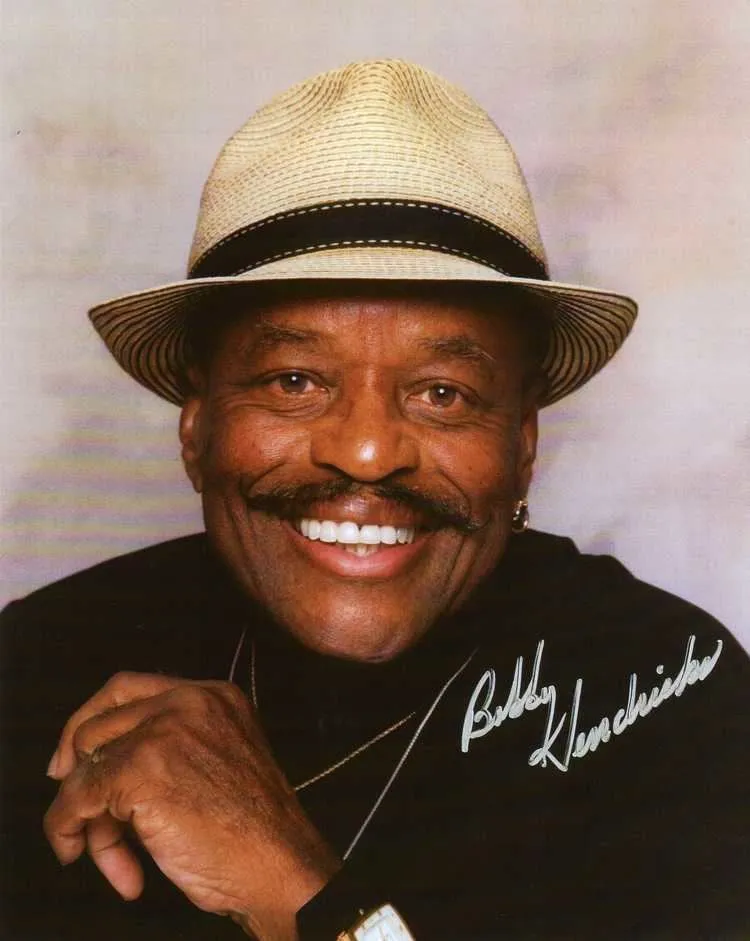 Photo: Robert "Bobby" Hendricks, via alchetron.com
It started with what should have been routine paperwork. Hendricks, transitioning from active duty to the Army Reserves, needed updated security clearance for his new position as a communications specialist. He filled out the forms, submitted his fingerprints, and waited for the standard approval that had come easily throughout his eight-year military career.
Instead, he received a letter that turned his world upside down: "Security clearance denied. Applicant flagged as foreign hostile under Defense Intelligence classification 7-Alpha."
When Numbers Become Weapons
The problem traced back to a single keystroke error made by a clerk at the Pentagon's Personnel Security Research Center. Hendricks's service number, 47291863, had been accidentally entered as 47291836 — a number that belonged to a suspected East German intelligence operative who had been under FBI surveillance since 1958.
That transposed "6" and "3" created a bureaucratic nightmare that would consume the next eleven years of Hendricks's life. In the paranoid atmosphere of the Cold War, computer systems were programmed to flag matches automatically, with no human oversight for obvious errors.
Suddenly, every federal database showed Robert Hendricks as the same person who had been photographed meeting with known Soviet agents in Berlin. His distinguished service record, his American birth certificate, even his high school yearbook photos became irrelevant in the face of a computer system that insisted he was a communist spy.
The Security State Eats Its Own
The consequences escalated quickly. Hendricks lost his reserve position and found himself unemployable for any job requiring federal background checks — which in the defense-heavy economy of the 1960s meant most good-paying work in his field.
Worse, the classification followed him everywhere. When he tried to visit his brother at Fort Bragg in 1963, military police detained him at the gate for six hours before determining he wasn't an immediate threat. A routine traffic stop in 1965 turned into a three-day ordeal when the officer's radio check triggered alerts in multiple federal databases.
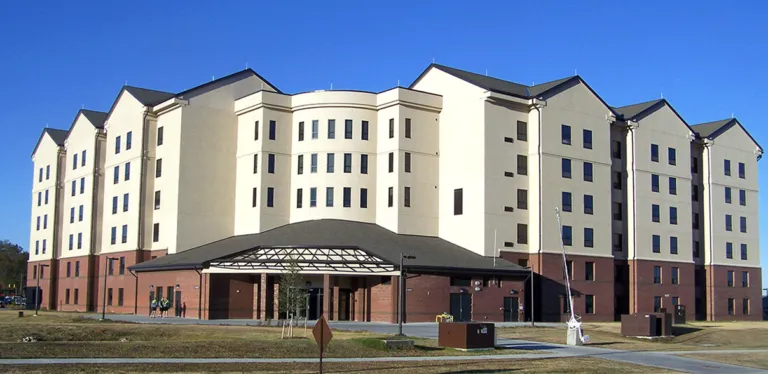 Photo: Fort Bragg, via ppdinc.com
"I started carrying my discharge papers, my Bronze Star citation, and letters from my commanding officers everywhere I went," Hendricks later recalled. "But none of it mattered. The computer said I was the enemy, and the computer was never wrong."
Fighting a War Against Paperwork
Hendricks's attempts to correct the error revealed the kafkaesque nature of Cold War security bureaucracy. Each agency he contacted — the Army, the FBI, the CIA, the Defense Intelligence Agency — acknowledged that he was clearly not a foreign spy, but none would take responsibility for fixing the central database that flagged him.
The Army said the error originated with Defense Intelligence. Defense Intelligence blamed the FBI's background check system. The FBI pointed to CIA foreign surveillance files. The CIA insisted the problem lay with military personnel records. Around and around the buck passed, while Hendricks remained officially classified as an enemy of the state he had sworn to defend.
His congressman tried to help but was told the classification was "too sensitive" to discuss. A lawyer took his case pro bono but discovered that challenging security classifications in court was nearly impossible under existing national security laws.
The Breakthrough That Almost Wasn't
The solution finally came from an unexpected source: the real enemy agent whose number had been confused with Hendricks's. In 1972, East German intelligence operative Klaus Richter was arrested by West German authorities and found to be carrying forged documents using multiple identities — including a backup set with the service number 47291863.
When interrogated, Richter revealed that he had been using the stolen American service number for years, unaware that it belonged to a real person. The revelation should have immediately cleared Hendricks, but it took another six months of bureaucratic wrangling before all agencies agreed to update their records.
Even then, the correction process was incomplete. Hendricks discovered in 1974 that some federal databases still flagged him as suspicious, requiring yet another round of appeals and documentation.
The Human Cost of Inhuman Systems
By the time his name was fully cleared in 1973, Hendricks had lost more than a decade of career opportunities. The stress had contributed to his divorce, estranged him from his children, and left him with what would now be recognized as severe anxiety disorder.
"I fought in Korea and came home a hero," he said in a 1975 interview with Stars and Stripes. "But I lost more battles against my own government's paperwork than I ever did against the Chinese."
The military eventually awarded him partial disability compensation for the psychological trauma, but refused to acknowledge any systemic problems with the security classification system that had destroyed his life.
The Machine That Sees Enemies Everywhere
Hendricks's ordeal highlighted a disturbing reality about Cold War America: the security apparatus designed to protect the country had become so automated and compartmentalized that it could randomly destroy innocent lives without anyone taking responsibility.
The same systems that were supposed to keep foreign agents out of sensitive positions were perfectly capable of treating decorated veterans as enemy spies based on nothing more than a clerical error. And once those systems marked someone as a threat, proving otherwise became nearly impossible.
A Legacy of Suspicion
Robert Hendricks died in 1998, having spent the final decades of his life working as a civilian electronics technician — a job far below his qualifications but one of the few that didn't require federal security clearance. His family found among his possessions a thick folder of documents related to his classification battle, including letters from three different presidents' administrations promising to "look into the matter."
Today, computerized security systems are far more sophisticated than the primitive databases that flagged Hendricks as an enemy agent. But the fundamental problem remains: when machines are programmed to see threats everywhere, sometimes the biggest threat they identify is the very people they're supposed to protect.