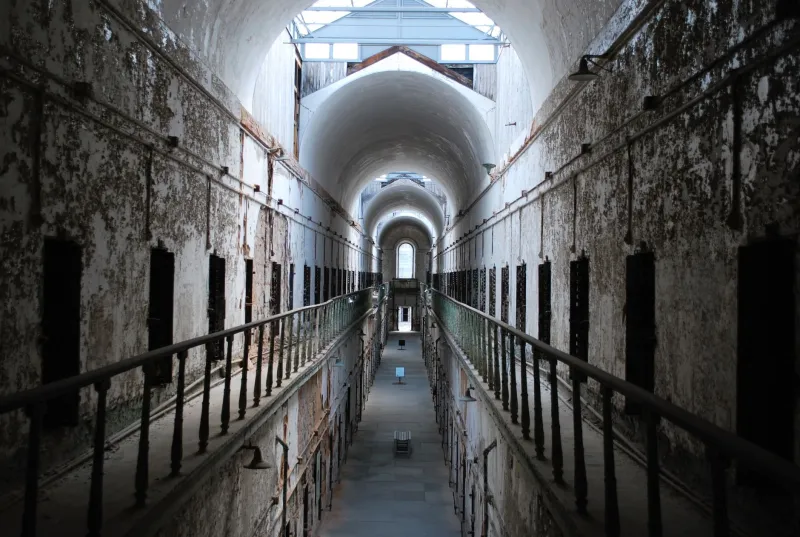
Blue on Blue in the Dark: The Civil War Skirmish Where Union Soldiers Fought Themselves for Three Days
Photo: Rhododendrites, CC BY-SA 4.0, via Wikimedia Commons
War is chaos. Everyone who has ever studied military history knows this in the abstract. But most people picture that chaos as confusion between armies — the enemy doing unexpected things, the fog of battle distorting the battlefield. What they don't usually picture is two units from the same army spending seventy-two hours trying to kill each other because nobody thought to send a letter.
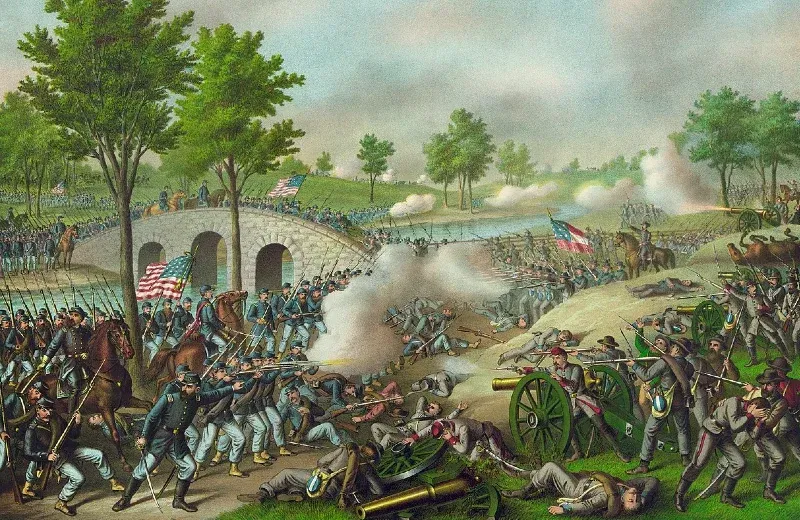 Photo: Civil War, via kajabi-storefronts-production.kajabi-cdn.com
And yet, in the fall of 1862, somewhere in the tangled geography of the Civil War's western campaign, that is almost exactly what happened.
Two Columns, One Valley, Zero Communication
By late 1862, the western theater of the Civil War was a logistical nightmare. Unlike the more organized campaigns in the East, the fighting across Kentucky, Tennessee, and the surrounding territories often involved militia units operating with significant autonomy — poorly supplied, loosely coordinated, and frequently out of contact with central command for days at a time.
It was in this environment that two Union militia detachments — drawn from different states, organized under different regional commanders, and operating on separate orders — converged on the same narrow valley from opposite ends. They arrived at night. Neither knew the other was there.
What each unit did know was that Confederate activity had been reported in the region. Both groups were on high alert. Both were moving carefully through terrain they didn't fully understand. And when the first unit's forward scouts detected movement coming from the opposite direction, they did exactly what their training told them to do: they assumed the worst and reported a possible enemy contact.
The First Shots
The initial exchange was tentative — a few scattered shots in the darkness, the kind of probing fire that soldiers use when they're not entirely sure what they're shooting at. Both sides took cover. Both sent runners back to their respective commanders with the same basic message: enemy troops spotted, position unknown, holding position.
The problem was that neither unit had any way of reaching the other to ask a simple question. Communication infrastructure in the western theater was inconsistent at best. Couriers had to travel on foot or horseback through unfamiliar terrain. And in the immediate aftermath of that first exchange, both commanders made the same reasonable but catastrophically wrong assumption: they were looking at Confederate irregulars.
Over the next two days, the two units exchanged periodic fire across the valley — never committing to a full assault, but never backing down either. Each side interpreted the other's hesitation as tactical maneuvering. Each side sent dispatches to regional command describing an ongoing engagement with Confederate forces. Those dispatches, traveling by different routes to different commanding officers, never crossed paths.
The Letter That Ended Everything
On the third day, a courier from one of the units was captured — not by the other Union detachment directly, but by a small Confederate scouting party that happened to be moving through the same area, apparently just as confused by the whole situation as everyone else.
The captured courier was carrying orders and identifying documents that made his Union affiliation unmistakably clear. The Confederate scouts, apparently more interested in intelligence than in holding prisoners, released him — possibly because they found the whole situation as baffling as it was — and he eventually made his way to the other Union unit's position.
What followed was, by any account, one of the more awkward moments in American military history. Officers from both detachments met under a hasty flag of truce, compared paperwork, and slowly pieced together what had happened. They had been fighting each other. For three days. With real ammunition.
Casualties were relatively light — the terrain had been as much of an obstacle as either side, and neither unit had pressed its advantage aggressively — but men had been wounded, and at least a small number had been killed, though precise figures were never officially confirmed.
The Army Buries the Story
Here's where the incident gets its second layer of strangeness: the U.S. Army's response was to make it disappear.
Official after-action reports from the period reference an "engagement with irregular forces" in the relevant area but contain no specifics that would identify the incident as a friendly-fire episode. The unit commanders involved were not court-martialed. No formal inquiry was launched. The men who participated were apparently encouraged — strongly — to keep the details among themselves.
This wasn't unusual for the era. The Civil War generated an enormous volume of military embarrassment, and the Union Army had a well-developed instinct for burying stories that undermined morale or made commanders look incompetent. A three-day battle against your own troops checked both boxes with room to spare.
What survives comes largely from personal letters and diaries — the kind of primary sources that historians spend careers digging through. Several soldiers from both units described the incident in private correspondence, some with dark humor, others with evident shame. The consistent thread across these accounts is disbelief: the sense that something so absurd couldn't possibly have happened, even as the writers confirmed that it had.
The Fog That Never Really Lifted
The phrase "fog of war" gets used so often it's practically a cliché. But this incident is a reminder of what it actually means at the ground level — not grand strategic confusion, but the simple, terrifying reality that in the middle of a chaotic conflict, two groups of men in identical uniforms, carrying identical weapons, fighting for the same side, can end up pointing those weapons at each other for three days without anyone noticing.
They weren't incompetent. They were operating exactly as their training and circumstances dictated. The system failed them — the communication infrastructure, the coordination protocols, the basic assumption that someone, somewhere, was keeping track of where everybody was.
The Civil War produced stranger stories than this one. But few of them capture the sheer, grinding absurdity of armed conflict quite so efficiently as two Union detachments, alone in a valley, doing the enemy's job for him.