One Dead Pig, Two Angry Armies, and the Most Polite Standoff in American Military History
Photo: Felix König, CC BY 3.0, via Wikimedia Commons
There is a small island in the Pacific Northwest, tucked between Washington State and Vancouver Island, where the most restrained military confrontation in American history played out over thirteen years. Soldiers from two nations camped on opposite ends of the island, exchanged pleasantries at joint celebrations, drank each other's liquor, and carefully, deliberately never once fired a weapon at a human being.
It started with a pig.
The Potato Garden Incident
San Juan Island in 1859 was a genuinely contested piece of real estate. The Oregon Treaty of 1846 had drawn the border between American and British territory along the 49th parallel and then through "the middle of the channel" separating Vancouver Island from the mainland. The problem was that nobody had specified which channel. There were two of them — Haro Strait and Rosario Strait — and San Juan Island sat right between them. Both the United States and Great Britain believed the island was theirs.
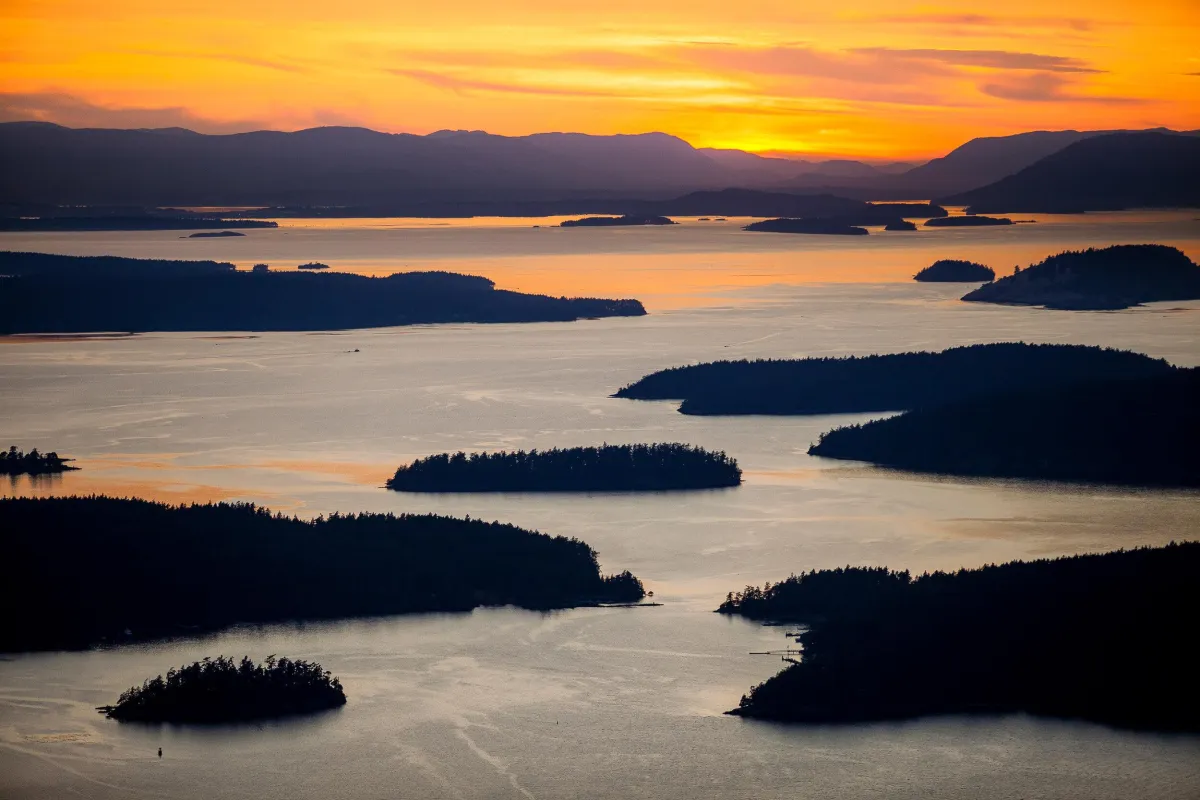 Photo: San Juan Island, via wallpaperaccess.com
Both countries had settlers living on the island as a result. The Americans were mostly farmers. The British, through the Hudson's Bay Company, ran a large sheep operation. The arrangement was uncomfortable but functional — until June 15, 1859, when a large black pig belonging to the Hudson's Bay Company wandered into the potato garden of an American farmer named Lyman Cutlar.
This was not the first time the pig had done this. Cutlar had complained before. On this particular morning, he had apparently run out of patience. He shot the pig dead.
The British, understandably annoyed, threatened to arrest Cutlar. The Americans, equally annoyed at the threat, appealed to the U.S. Army for protection. And within weeks, what had started as an argument over a pig and some potatoes had escalated into a full military standoff.
Armies That Refused to Fight
U.S. Army Captain George Pickett — yes, that George Pickett, who would later lead the catastrophic charge at Gettysburg — arrived on San Juan Island with 66 soldiers and orders to defend American settlers. The British responded by sending three warships. Then five. Then eventually a naval force carrying more than 2,000 men.
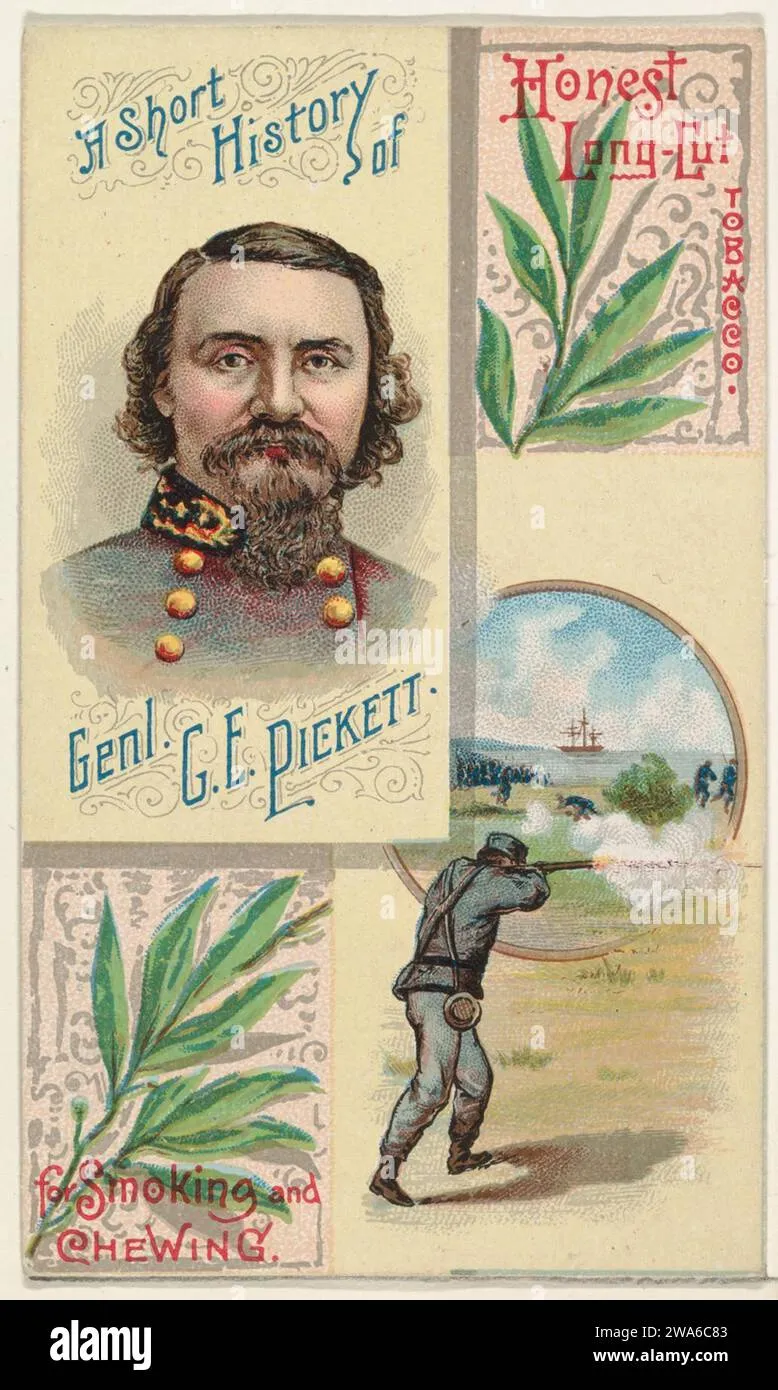 Photo: George Pickett, via c8.alamy.com
Pickett had 461 soldiers by that point. He had also reportedly told his men that he would "make a Bunker Hill of it" if the British landed. The British admiral on scene, Robert Baynes, looked at the situation and made a decision that history should remember more fondly than it does: he refused to open fire over what he called "a squabble about a pig."
Both governments, when word reached them, essentially agreed with Baynes. Neither Washington nor London wanted a war over an island most people had never heard of. They negotiated a joint military occupation — both sides would station troops on the island, maintain civil order, and wait for diplomats to sort out the boundary question.
What followed was one of the more unusual arrangements in military history. American troops camped at the south end of the island. British Royal Marines set up at the north end. They held joint Fourth of July and Queen's Birthday celebrations. Officers visited each other's camps for dinner. They hunted together. By most accounts, they genuinely got along.
The Typo That Kept the Dispute Alive
The joint occupation lasted from 1859 to 1872 — thirteen years of armed friendliness. The resolution came through international arbitration, with German Emperor Kaiser Wilhelm I serving as the deciding authority. His commission ruled in favor of the United States, placing San Juan Island firmly on the American side of the border along Haro Strait.
But the treaty language that finally closed the matter had its own problems. The boundary description used the phrase "middle of the channel" without precisely defining the geographic coordinates of that midline in certain stretches. For years afterward, small navigational disputes flared up about exactly where the line ran through specific passages — disputes that required additional surveys and clarifications well into the 1880s.
The broader lesson here is almost comedic in its consistency: the same vagueness in the 1846 Oregon Treaty that created the Pig War in the first place was echoed in the documents meant to end it. Diplomats and cartographers kept bumping into the same problem — that drawing a line on a map and describing that line in words are two very different skills, and the gap between them has started more conflicts than most people realize.
The Island Today
San Juan Island is now home to San Juan Island National Historical Park, which maintains both the American Camp and English Camp sites. Visitors can walk between the two, read the interpretive signs, and stand in the exact spots where soldiers from two nations once shared meals and carefully avoided killing each other.
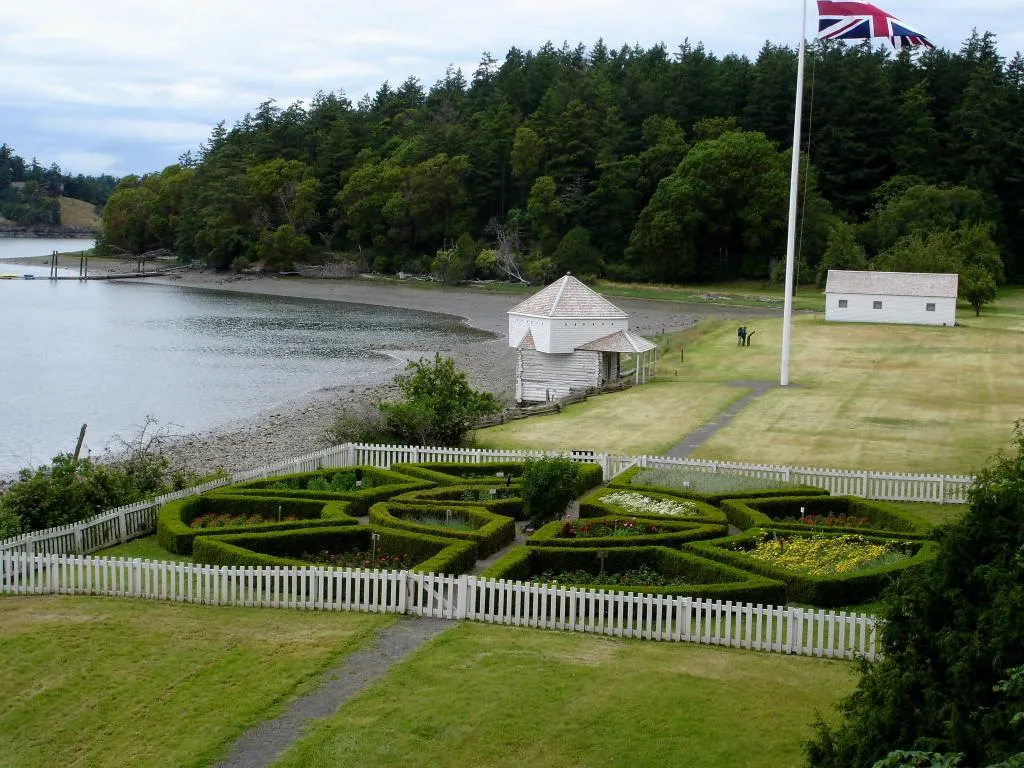 Photo: San Juan Island National Historical Park, via www.nationalparkstraveler.org
The pig, unfortunately, has no monument. Lyman Cutlar's potato garden is long gone. But the story of what happened there in the summer of 1859 remains one of the stranger footnotes in American military history — a reminder that the line between armed conflict and armed awkwardness is sometimes just a matter of whether one admiral decides the whole thing is too ridiculous to be worth dying over.
He was right. It was.