The Sugar Pill That Worked So Well It Broke the Rules of the Experiment
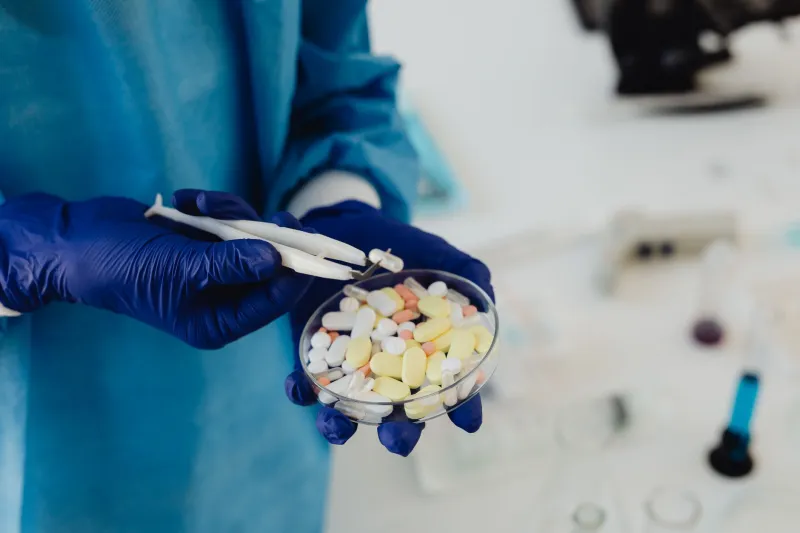
Every clinical drug trial has two groups. One gets the real treatment. The other gets a placebo — an inert substitute, usually a sugar pill or a saline injection, designed to account for the power of expectation. The whole point of the placebo group is to establish a baseline, a floor of improvement that can be attributed to psychology rather than pharmacology.
The system works beautifully, right up until the moment the placebo group starts getting better at a rate that makes the researchers deeply uncomfortable.
This has happened. It has happened in ways that forced trial committees to stop their own research mid-stream, wrestle with questions medicine wasn't designed to answer, and ultimately confront the disorienting possibility that the human body, under the right conditions, can be its own best pharmaceutical.
The Trial That Had to End Early — For the Wrong Reason
In the early 1990s, researchers running a trial for a new antidepressant noticed something unusual in their interim data. The drug group was improving. That was expected. But the placebo group was also improving — dramatically, measurably, and at a rate that was making the difference between the two groups statistically difficult to justify.
Under standard trial ethics, a study must be halted if continuing it would cause harm to participants. The typical version of this rule kicks in when the drug works so well that giving the control group a fake treatment becomes cruel. But this trial ran into the inverse problem: the placebo was working well enough that researchers began questioning whether it was ethical to stop giving it to people.
The committee overseeing the trial faced a question with no clean answer. If the placebo was generating genuine, measurable symptom relief, was withholding it — by ending the trial and returning participants to standard care — a form of harm? And if the sugar pill was doing something real, what exactly was it doing?
What 'Placebo Effect' Actually Means
Most people understand the placebo effect as a kind of trick — the mind believes it's being treated, relaxes, and feels a little better. A mild, temporary, mostly psychological phenomenon. This understanding is not wrong, exactly. It's just radically incomplete.
Research over the past three decades has documented placebo responses that involve genuine, measurable physiological changes. In studies of pain management, patients given placebo painkillers show elevated levels of endorphins — the same natural opioids that actual pain medications stimulate. Brain scans reveal that the placebo response activates the same neural pathways as the real drug.
In one landmark study out of Harvard Medical School, patients with irritable bowel syndrome were given placebos and — crucially — were told they were receiving placebos. Openly. The researchers informed participants that the pills contained no active ingredient. The patients still improved at a rate significantly higher than the control group that received no treatment at all.
The implication is staggering: the placebo effect, in some contexts, doesn't even require deception to function.
The Knee Surgery That Wasn't
Perhaps the most dramatic example of a placebo outperforming expectations came from a 2002 study published in the New England Journal of Medicine — one that remains controversial and cited in equal measure to this day.
Orthopedic surgeon J. Bruce Moseley at the Houston VA Medical Center ran a controlled trial on a common knee surgery for osteoarthritis — a procedure called arthroscopic debridement, which had been performed on hundreds of thousands of American patients annually. He divided participants into three groups: one received the full surgery, one received a partial version, and one received a sham surgery. In the sham procedure, patients were sedated, incisions were made in their knees, and the surgical team went through the motions — sounds, instruments, irrigation fluid — without actually operating.
Patients in all three groups reported similar levels of pain relief and improved function over the following two years.
The study didn't prove the surgery was useless. It proved that whatever the surgery was doing, a significant portion of its effect was happening in the patient's nervous system, not their knee joint. The physical ritual of being operated on — the hospital, the anesthesia, the recovery, the expectation of improvement — was generating real outcomes.
The medical community's response was, to put it gently, unsettled.
The Ethics Nobody Prepared For
When a placebo works as well as — or better than — the treatment it's meant to measure, the clinical trial system faces a philosophical crisis it was never designed to handle.
Trials exist to determine whether a drug or procedure is effective. But "effective" has always been implicitly defined as "effective beyond placebo." When the placebo clears that bar on its own, the entire framework wobbles.
Researchers have proposed various frameworks for understanding this: that the therapeutic relationship itself is medicine, that ritual and expectation are delivery mechanisms for genuine biochemical change, that the mind-body distinction medicine has relied on for centuries is less clean than anyone assumed.
None of these explanations are fully satisfying. None of them fully resolve the ethical tangle of running a trial where the control group might be receiving something valuable.
The Uncomfortable Takeaway
Medicine has known about the placebo effect for as long as medicine has existed. What's changed in the past few decades is the understanding that it isn't a flaw in the system — it's a feature of human biology that the system hasn't figured out how to use yet.
When a sugar pill relieves pain by triggering a real opioid response, it isn't fooling the body. It's activating something the body already knew how to do. The researchers who had to stop their trials early weren't victims of bad data. They were witnesses to something genuinely strange about how healing works — something that sits at the edge of what medicine can currently explain.
The placebo doesn't lie. It just tells a truth that science is still learning how to hear.