The Rotting Ship That Legally Owned Itself — and Charged Fees for Thirty Years
At some point in the history of American maritime law, a federal judge looked at a piece of paper, looked at the relevant statutes, looked back at the paper, and wrote a ruling that effectively declared a decomposing wooden ship to be its own legal owner. Then he probably went home and had a very stiff drink.
The story of how a wrecked Gulf Coast cargo vessel became an accidental financial entity — collecting fees, holding assets, and resisting every attempt to close its books — is one of the stranger footnotes in American legal history. And it started, as these things often do, with a perfectly ordinary disaster.
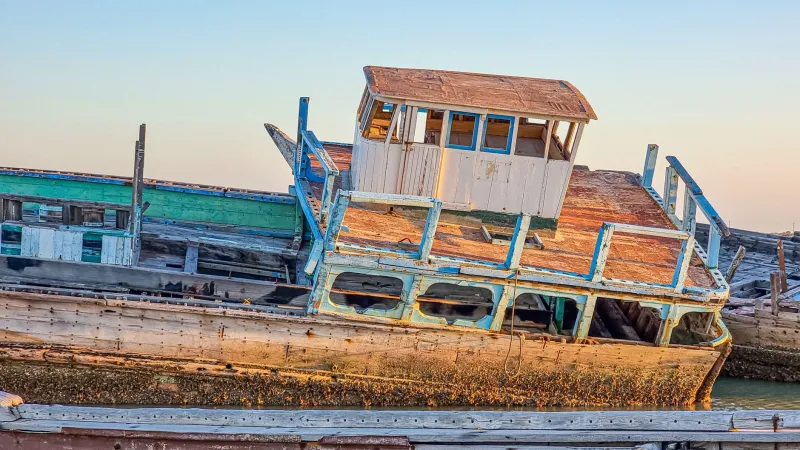
 Photo: Gulf Coast, via static1.thetravelimages.com
The Wreck
Sometime in the latter half of the 19th century, a commercial cargo vessel — the kind that hauled cotton, grain, or manufactured goods along the Gulf Coast trade routes — ran aground in circumstances that were, initially, unremarkable. Ships ran aground. It happened constantly in an era before reliable charts, radio communication, or satellite navigation. You dropped anchor, assessed the damage, and started figuring out who owed what to whom.
The problem with this particular wreck was the cargo.
The ship was carrying goods belonging to multiple parties — some of them individuals, some of them trading companies, at least one of them an entity whose legal status was itself in question following a series of post-Civil War business reorganizations. Ownership of the cargo was disputed almost immediately. And in 19th-century admiralty law, disputed cargo on a wrecked vessel was the legal equivalent of a tar pit: the more you struggled, the deeper you sank.
Admiralty Law: Where Normal Rules Go to Die
To understand what happened next, you need a brief and slightly painful introduction to admiralty law, which is the body of rules governing ships, the sea, and everything that happens when the two interact badly.
Admiralty law has its own courts, its own procedures, and its own logic — a logic that evolved over centuries of maritime commerce and occasionally produces outcomes that look completely insane when viewed from the shore.
One of its key concepts is the idea that a vessel can have legal standing — that a ship itself can be named as a party in a lawsuit. This isn't metaphorical. Courts regularly adjudicate cases styled as [Plaintiff] v. The Vessel [Name], treating the ship as the entity being held accountable. It's a procedural convenience that makes it easier to resolve disputes when ownership of the ship is unclear or contested.
In normal circumstances, this works fine. The ship is named, the case is resolved, and the vessel's human owners pay whatever the court decides.
In abnormal circumstances — say, when the human owners are dead, dissolved, or simply impossible to locate — things get more complicated.
How a Ship Becomes Its Own Landlord
The legal proceedings around this particular wreck stretched across multiple courts and multiple years. Ownership claims were filed and contested. Some claimants died during the litigation. Others were corporations that had since merged, dissolved, or reorganized under different names. At least one set of claims was tied to an estate that was itself in probate.
At some point, the courts had to do something with the cargo that remained on the wreck — much of it waterlogged but partially recoverable, and therefore still valuable. Salvage operations were ongoing. Fees were being generated. Someone had to hold those fees.
The solution the courts arrived at, through a series of rulings that each made sense in isolation, was to assign the legal interest in the remaining cargo to the vessel itself. The ship, already named as a party in the admiralty proceedings, became the nominal owner of its own contents. An account was established. Salvage fees flowed into it.
And there they sat.
Because while the courts had managed to assign ownership of the fees, they hadn't managed to identify any living human or legitimate corporate entity with a valid claim to collect them. The account was real. The money was real. The owner was a rotting pile of timber slowly dissolving into the Gulf of Mexico.
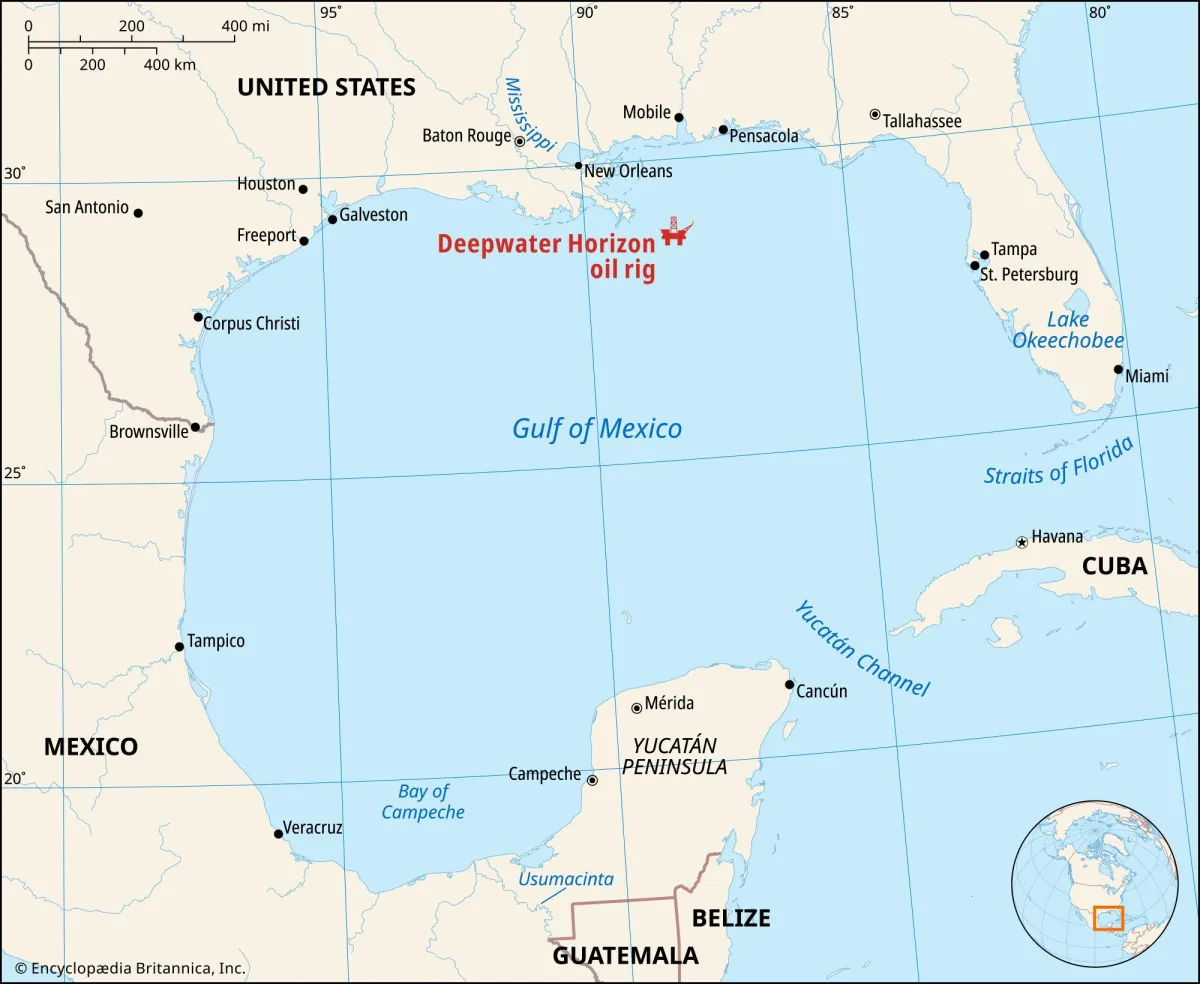 Photo: Gulf of Mexico, via cdn.britannica.com
Thirty Years of Bureaucratic Limbo
For approximately three decades, the situation persisted in a state of low-grade legal absurdity. The salvage account continued to exist. Periodic attempts to resolve the ownership question ran into the same wall of dead claimants, dissolved companies, and procedural complications that had created the problem in the first place.
Small amounts were occasionally disbursed to parties with partial, arguable claims — the maritime equivalent of throwing bones to keep the lawyers quiet. But the core account, the one nominally held by the vessel, remained open.
Local attorneys who knew about the case apparently treated it as a kind of professional curiosity — a thing you mentioned at bar association dinners when the conversation turned to strange cases. The wreck itself became a minor landmark, visited occasionally by recreational divers who had no idea they were swimming through the remains of an accredited financial entity.
Congress Closes the Account
The resolution, when it finally came, required an act of Congress. Specifically, a piece of legislation that clarified the disposition of certain unclaimed admiralty funds and established a mechanism for closing accounts that had no living beneficiary.
The shipwreck's account was swept into a federal fund. The fees it had collected over three decades were absorbed into the general maritime account. The vessel's legal standing was formally extinguished.
It had taken thirty years, multiple court proceedings, and a federal statute to accomplish what should have been resolved in the original salvage hearing.
The ship, for its part, had long since finished the process of returning to the seafloor. It didn't file an objection. It just kept doing what wrecks do — sitting there, quietly, holding its secrets and, for one genuinely strange chapter of American legal history, its own title deed.