The Wartime Blob That Nobody Wanted — Until Kids Got Their Hands on It
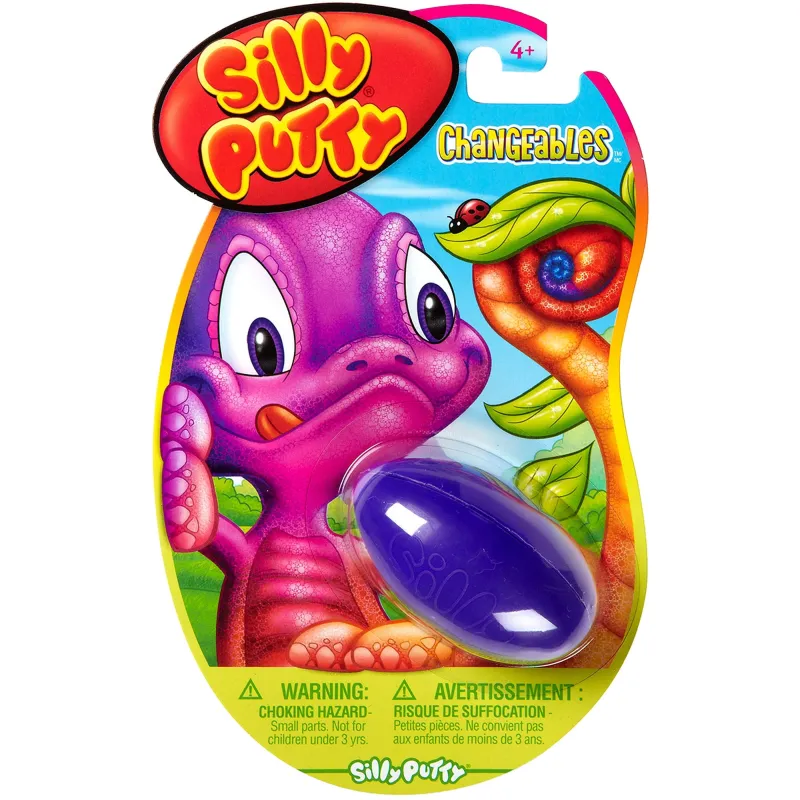
Photo: silly putty colorful stretchy toy close up, via i5.walmartimages.com
In 1943, James Wright was under serious pressure. The United States was deep into World War II, and rubber — real, natural rubber from Southeast Asian plantations — had become nearly impossible to get. Japan had cut off the supply lines, and the military needed rubber for everything: tires, boots, gas masks, oxygen masks, aircraft components. The government had put out a call to scientists and engineers across the country: find us a substitute, and find it fast.
 Photo: James Wright, via plutopia.io
Wright, working out of General Electric's lab in New Haven, Connecticut, was determined to answer that call. He had the credentials, the equipment, and the motivation. What he did not have, as it turned out, was any idea he was about to create something completely pointless — and eventually worth millions.
 Photo: New Haven, Connecticut, via static.vecteezy.com
The Experiment That Went Nowhere (and Everywhere)
Wright was experimenting with silicone oil, a synthetic compound, when he added boric acid to the mix and heated the result. What came out of that process was a rubbery, pinkish blob that did some genuinely strange things. It bounced higher than rubber. It stretched without tearing. It could be shaped and reshaped endlessly. Press it against a newspaper and it would lift the ink right off the page.
It also did absolutely nothing useful for the war effort.
Synthetic rubber needs to hold its shape under pressure. It needs to be durable and consistent. Wright's creation was none of those things. It was stretchy in ways that made it impractical. It would slowly ooze into a puddle if you left it sitting. Engineers tested it. Chemists analyzed it. Nobody could figure out a single practical application for the stuff. GE filed it away in its catalog of failed experiments and moved on.
For the next several years, the blob — internally called "nutty putty" by some of the scientists who kept poking at it — made the rounds at scientific conferences as a curiosity. Researchers from multiple countries tried to crack its potential. Nothing stuck, so to speak.
Enter the Toy Store Owner
The story might have ended there, buried in a binder somewhere in a GE filing cabinet, if not for a woman named Ruth Fallgatter. In 1949, Fallgatter ran a toy store in New Haven and had crossed paths with a marketing consultant named Peter Hodgson. Hodgson was the kind of person who looked at strange things and immediately started calculating what other people would pay for them.
 Photo: Peter Hodgson, via www.peterhodgson.co.uk
At a party, someone pulled out a lump of Wright's silicone compound and started passing it around. Adults were mildly amused. The kids in the room, however, were absolutely captivated. They bounced it, stretched it, smashed it into a ball, and refused to give it back.
Hodgson saw a product. Fallgatter was skeptical but agreed to include it in her store's catalog. It outsold almost everything else in the book.
Fallgatter still wasn't convinced there was a real business here. Hodgson was very convinced. He borrowed $147, bought a batch of the compound from GE, and started packaging it in plastic eggs — partly because Easter was coming up and partly because the egg shape seemed to match the product's weird, organic energy. He called it Silly Putty.
The Accidental Empire
In 1950, a New Yorker writer spotted Silly Putty at a Manhattan toy store and mentioned it in an article. Within four days, Hodgson had received orders for 250,000 units. By the end of that year, he had sold close to a million eggs of the stuff.
The timing was almost poetic. The war that had originally inspired Wright's failed experiment was long over. The rubber shortage that made synthetic alternatives urgent had resolved itself. And yet the accidental byproduct of that desperate wartime search had found its market not in military equipment but in the hands of children who just thought it was delightful.
Silly Putty went on to become one of the best-selling toys in American history. It made the list of the 100 greatest toys of the 20th century. NASA even used a version of it during the Apollo missions to secure tools in zero gravity — which means the substance that was too impractical for wartime eventually made it to the moon.
James Wright never received royalties. He was a GE employee, and the invention belonged to the company. Hodgson, the marketing consultant who saw what nobody else could, was worth more than $140 million when he died in 1976.
What Failure Actually Looks Like
The story of Silly Putty is one of those reminders that progress rarely travels in a straight line. Wright wasn't trying to invent a toy. He was trying to solve a real, urgent problem, and by every measurable standard, he failed. The substance he created couldn't do what it was designed to do.
But the history of American innovation is quietly full of these moments — accidental discoveries that got filed under "useless" until someone looked at them sideways and saw something else entirely. Penicillin famously came from a contaminated petri dish. Microwave ovens trace their origin to a melted chocolate bar near a radar device. Post-it notes were a failed attempt at a super-strong adhesive.
The difference between a failed experiment and a revolutionary product is sometimes just a matter of who's in the room when a kid starts playing with it.