The Town That Voted So Hard It Erased Itself from the Map
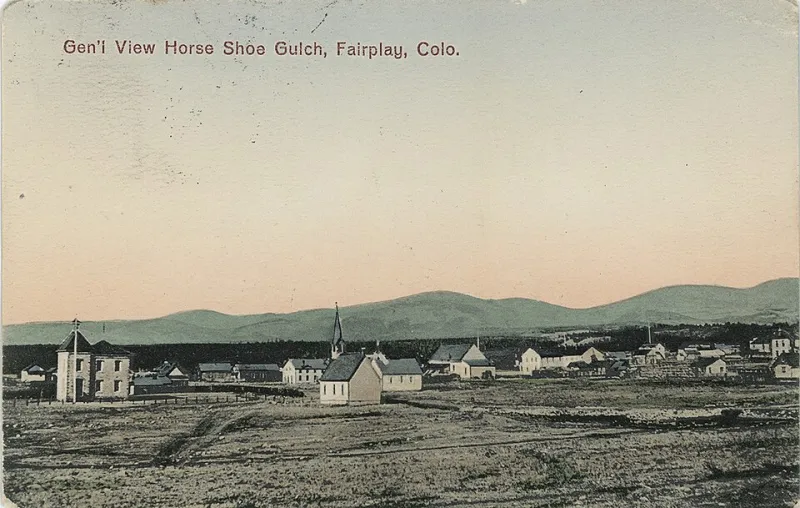
Photo: Unknown, Public domain, via Wikimedia Commons
Democracy is a beautiful thing. You show up, you cast your ballot, you go home and trust that the machinery of civic life will sort out the details. What you probably don't expect is to wake up the next morning and discover that the machinery of civic life has sorted out you — right off the official map.
That's more or less what happened to one small American town in the early twentieth century, when a municipal referendum went so sideways that the act of voting itself became the town's undoing.
A Dispute, a Ballot, and a Very Bad Afternoon for the Town Clerk
The specifics vary by account, but the bones of the story are consistent: a rural community — the kind with one main road, a post office, a grain elevator, and enough opinions to fill a county newspaper — found itself locked in a local argument. The exact subject of the dispute has been described variously as a road assessment, a utility question, or a zoning disagreement, depending on who's telling it.
Whatever the issue, the town fathers decided to handle it the right way: put it to a vote. A formal referendum was organized. Ballot language was drafted — probably by the town attorney, possibly by whoever was available that week — and the measure was placed before the residents.
What nobody noticed, or nobody noticed in time, was that the ballot language had a problem.
The way the measure was worded, a "yes" vote didn't just resolve the local dispute. It triggered a clause in the town's original municipal charter — a clause that, under state law at the time, automatically initiated the dissolution of the incorporated municipality if approved by a majority of registered voters.
The measure passed.
The Morning After
Picture the scene: a Tuesday morning in rural America, sometime in the first decades of the 1900s. People are doing what people do — feeding livestock, opening shops, walking to the post office. Somewhere in the county seat, a clerk is reviewing the certified election results and doing some light reading of the relevant statutes.
And then someone makes a phone call, or sends a telegram, or rides out in a wagon, because that's how news traveled, and the message is some version of: There might be a situation.
The town, legally speaking, no longer existed. Its charter had been dissolved by its own voters. The municipal government — the mayor, the council, the ordinances, the tax authority, all of it — had been retroactively unwound by the democratic process it was designed to serve.
Residents were now living in unincorporated territory. Which meant no local government to maintain roads. No municipal authority to issue permits. No legal framework to collect taxes or provide services. Just a cluster of houses and businesses sitting in a jurisdictional void, technically governed by the county but practically left to figure things out on their own.
The Decade-Long Untangling
Here's where the story shifts from comedy to something more quietly impressive: the community didn't fall apart. People still showed up to the grain elevator. The post office kept running. The road got graded when it needed to be graded, one way or another.
But the legal situation was genuinely chaotic. Property records were in question. Contracts signed under municipal authority were of uncertain validity. Anyone who wanted to challenge a local decision in court had to first argue about whether there was a local government capable of making decisions at all.
State officials, to their credit, recognized that a town accidentally voting itself out of existence was a problem worth solving — even if the solution was going to take a while. The reincorporation process required navigating layers of state statute that hadn't been written with "oops, we dissolved ourselves" scenarios in mind.
It took the better part of a decade. There were competing legal opinions, at least one trip to the state legislature for clarifying language, and a second referendum — this one with extremely careful ballot wording that several lawyers had reviewed multiple times — to formally reconstitute the municipality.
When it was over, the town was back on the map. Same roads, same buildings, same people. Just with a story that got told at every town meeting for the next fifty years.
The Fine Print Nobody Reads
What makes this story stick isn't the legal absurdity, though there's plenty of that. It's the very human sequence of events that produced it: a genuine civic dispute, a good-faith attempt to resolve it democratically, and a catastrophic failure to read the document all the way to the end.
Municipal charters from that era were often dense, poorly organized documents written by lawyers who were paid by the page and reviewed by officials who had other things to do. Dissolution clauses existed in many of them as a kind of last-resort mechanism — a way for a community to formally wind down if it chose to. Nobody expected that mechanism to get triggered by accident during a routine vote about road assessments.
But that's the thing about legal language. It doesn't care about your intentions. It just does what it says.
The town survived. Its charter survived. And somewhere in the county archives, if you know where to look, there's a certified election result that officially records the day an entire community voted itself into nonexistence — and then spent ten years arguing its way back.