Your Honor, I'd Like to Submit a Groundhog: The Ohio Lawsuit That Made a Judge Rule on Punxsutawney Phil

Photo: Anthony Quintano from Mount Laurel, United States, CC BY 2.0, via Wikimedia Commons
Your Honor, I'd Like to Submit a Groundhog: The Ohio Lawsuit That Made a Judge Rule on Punxsutawney Phil
Legal proceedings have seen some genuinely strange evidence over the years. Courtrooms have received photographs, voicemails, social media posts, and at least one case involving a rubber duck as a key exhibit. But in 2013, a civil courtroom in Ohio was asked to consider something that no law school curriculum had ever prepared anyone for: the formal meteorological predictions of a groundhog.
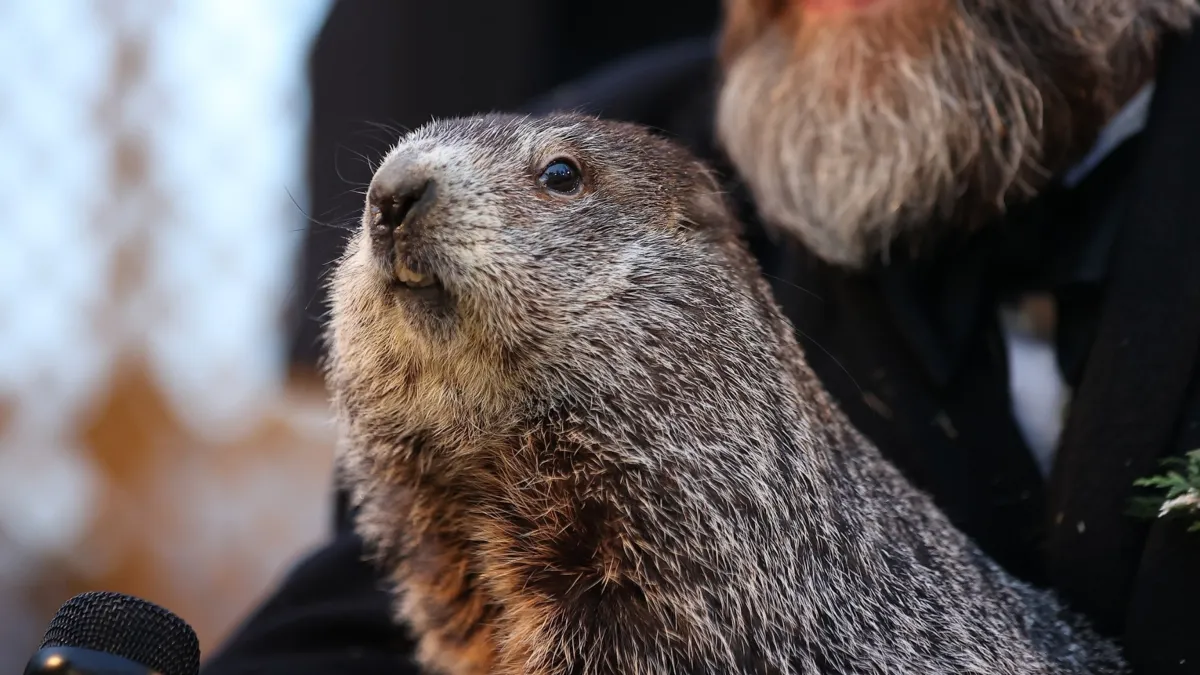 Photo: Punxsutawney Phil, via i.abcnewsfe.com
Not a metaphorical groundhog. Not a groundhog as a cultural reference. The actual official forecast issued by Punxsutawney Phil, the celebrated Pennsylvania rodent whose Groundhog Day shadow — or lack thereof — has been treated as a harbinger of seasonal weather since 1887.
And a judge had to rule on it.
The Case Behind the Chaos
The underlying dispute was, on its face, completely ordinary. An Ohio plaintiff had filed a claim against an insurance company over weather-related property damage — the specifics involved whether certain atmospheric conditions during a particular stretch of late winter qualified under the terms of a homeowner's policy.
Insurance weather disputes are genuinely common. They hinge on definitions: what counts as a storm, what qualifies as an "extreme weather event," whether the conditions that caused damage match the language in the policy. Insurers frequently rely on meteorological data — official temperature records, precipitation logs, National Weather Service reports — to argue that conditions were or weren't what the claimant says they were.
The insurance company in this case had submitted a package of meteorological documentation to support its position that the weather during the relevant period had been within normal seasonal parameters — not the severe, claim-worthy event the plaintiff described.
That's when the plaintiff's attorney decided to get creative.
Enter the Groundhog
The attorney's argument, stripped to its core, was elegantly provocative: if the insurer was going to make claims about what the weather had been like during late winter, then it was worth noting that the most publicly recognized seasonal weather forecast in American culture — the one issued by Punxsutawney Phil on February 2nd of that year — had predicted an early spring. Which is to say, the groundhog had not seen his shadow. Winter, according to Phil, was on its way out.
The attorney formally submitted Phil's official forecast as documentary evidence, complete with the announcement text issued by the Inner Circle, the top-hat-wearing group of Pennsylvania dignitaries who serve as the groundhog's official handlers and interpreters. The document was real, it was public record, and it made a specific seasonal claim.
The motion argued that if the court was going to weigh meteorological evidence, it should weigh all available meteorological evidence — including, yes, the groundhog.
The Judge's Problem
Here's where it gets genuinely interesting from a legal standpoint. The judge couldn't simply laugh the motion out of the room, tempting as that must have been. Civil procedure requires that evidentiary submissions be formally considered and ruled upon. You can't just wave something away because it's absurd — you have to explain, on the record, why it doesn't meet the standard for admissibility.
The standards for weather evidence in civil litigation are, it turns out, surprisingly loose. Courts have historically accepted a wide range of materials as relevant to establishing atmospheric conditions — farmer's almanac entries, personal weather diaries, even newspaper weather reports from the relevant date. The question of whether any given piece of evidence is reliable is separate from whether it's admissible.
The judge ultimately ruled the groundhog forecast inadmissible — but the reasoning required some actual legal work. The decision noted that Phil's predictions lacked the empirical methodology required for scientific evidence under Ohio's evidentiary standards, and that the forecast represented a cultural tradition rather than a documented meteorological observation. The Inner Circle, the ruling essentially noted, is not the National Weather Service.
But the judge also, reportedly, acknowledged that the submission wasn't entirely frivolous as a rhetorical point about the selective use of weather data. The insurer's meteorological package was subsequently scrutinized more carefully than it might otherwise have been.
Why It Made Headlines
The story briefly escaped the legal trade press and landed in mainstream outlets, mostly because it was irresistible. "Judge Rules on Groundhog Evidence" writes itself. Legal bloggers had a field day. A few meteorology publications ran slightly exasperated pieces about the episode.
What the coverage mostly missed, though, was the legitimate legal argument lurking underneath the stunt. Insurance weather disputes genuinely do involve contested and sometimes sloppy use of meteorological data. Insurers sometimes cherry-pick data points that support their position while ignoring contradictory evidence. The attorney's move — however theatrical — was pointing at a real problem with a very silly finger.
The case ultimately settled, as the vast majority of civil insurance disputes do, before reaching a final verdict. The terms were not disclosed. Punxsutawney Phil was not called to testify, which is probably for the best given his track record: studies have repeatedly shown that Phil's predictions are accurate roughly 40 percent of the time, which is meaningfully worse than a coin flip.
The Fringe Where Law Meets Folklore
What makes this case stick in the memory isn't really the groundhog. It's what the groundhog reveals: that American legal proceedings are only as dignified as the people participating in them, and that a sufficiently creative attorney can force almost any system to confront almost any absurdity.
Somewhere in an Ohio courthouse archive, there is a legal filing that formally asks a judge to consider the shadow-based weather forecast of a Pennsylvania rodent as evidence in a civil dispute. It exists. It was real. A real judge read it and had to write a real response.
If that doesn't qualify as a fact that sounds too weird to be true, it's hard to imagine what does.